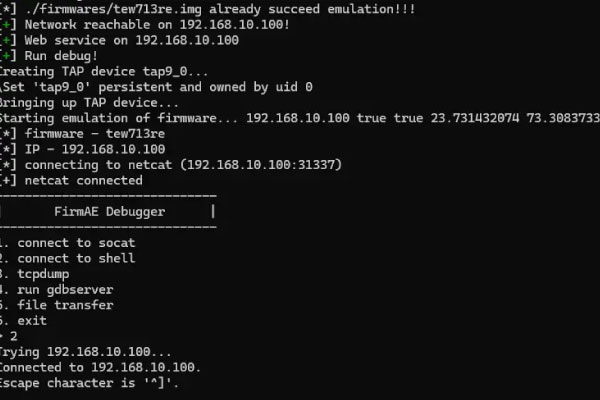
A critical pre-authentication command injection flaw has been discovered in the Trendnet TEW-713RE Wi-Fi extender that allows remote attackers to gain complete control of the device through a single crafted HTTP request. Tracked as CVE-2025-15471 with a CVSS score of 9.8, the vulnerability poses an immediate risk to networks using this hardware, as no login or authentication is required to exploit it. The issue originates from an exposed system management endpoint in the device firmware, where user-supplied input is passed directly to the operating system for execution. A specific request parameter accepts unrestricted shell commands, and the backend executes them without validation or access checks. Because the web service runs with root privileges, any injected command is executed with full system rights, allowing attackers to run arbitrary code remotely. Successful exploitation enables attackers to fully compromise the extender, including enabling remote access services, monitoring or manipulating network traffic, and using the device as a foothold to move deeper into the internal network. Until a vendor patch is released, users are strongly advised to limit access to the device’s management interface and ensure it is not reachable from the public internet.
A large-scale phishing campaign has been identified leveraging RFQ (Request for Quotation) themed emails to distribute credential-stealing malware. Attackers disguise malicious HTM...
Two critical vulnerabilities in Progress ShareFile have been identified that can be chained to achieve pre-authentication remote code execution (RCE). Discovered by watchTowr resea...
The FBI has issued a warning highlighting potential security and privacy risks associated with widely used mobile applications developed by Chinese companies. These applications, a...