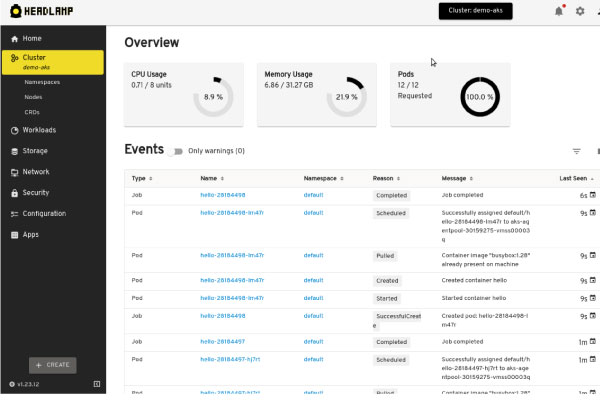
A critical security vulnerability has been discovered in Headlamp, a highly popular extensible web interface for administering Kubernetes clusters. Headlamp is known for being highly user-friendly and extensible, but this discovered vulnerability, CVE-2025-14269, poses a critical threat with a severity level of 8.8 according to its CVSS. Headlamp is affected in its handling of credentials for interacting with Helm, the package manager for Kubernetes. The issue arises due to flawed management of session and credentials in the in-cluster Headlamp instance. If the credentials for the already-authenticated administrator to Helm functionality are cached under certain conditions, the unauthenticated user with the ability to view the Headlamp UI can use these cached credentials to execute Helm operations without actually having to log into the application. This can lead to the attacker using the application to deploy, configure, or delete Helm releases in the aforementioned Kubernetes cluster. A particular combination of circumstances is required to trigger the problem of exploitation. The Headlamp component needs to be installed in-cluster desktop installations are not vulnerable, the configuration option config.enableHelm needs to be enabled, and there needs to be an authenticated user that has previously accessed the Helm-related functionality, which primes the credential cache in preparation. It is a perfect storm scenario that, while circumscribed, is definitely a danger, especially when the Headlamp dashboard is network accessible. The flaw impacts the Headlamp version prior to v0.38.0 and has since been fixed in version v0.39.0 and later. For those who cannot upgrade at the moment, the maintainers recommend that network exposure be mitigated by not making the Headlamp publicly accessible through an ingress. It is also advisable that the security teams monitor the logs for any fishy requests to the Helm endpoints like the clusters/main/helm/releases/list.
Cybercriminals are now weaponizing legitimate hotel reservation data to trick travelers into surrendering their payment details. This "Reservation Hijack Scam" stands out b...
A serious security issue has been discovered in nginx-ui, which can allow attackers to take full control of a system. This vulnerability is tracked as CVE-2026-33026. The problem e...
A sophisticated phishing campaign is targeting Spanish speaking users across Latin America and Europe, aiming to deploy Windows banking malware such as Casbaneiro (also known as Me...