

Maritime Cybersecurity Services for Ships, Ports & Maritime Infrastructure
Protect shipboard IT and OT, navigation systems, vessel networks, shore infrastructure, maritime applications and connected port environments with risk-based cybersecurity assessment, penetration testing, OT security, compliance and cyber resilience services.
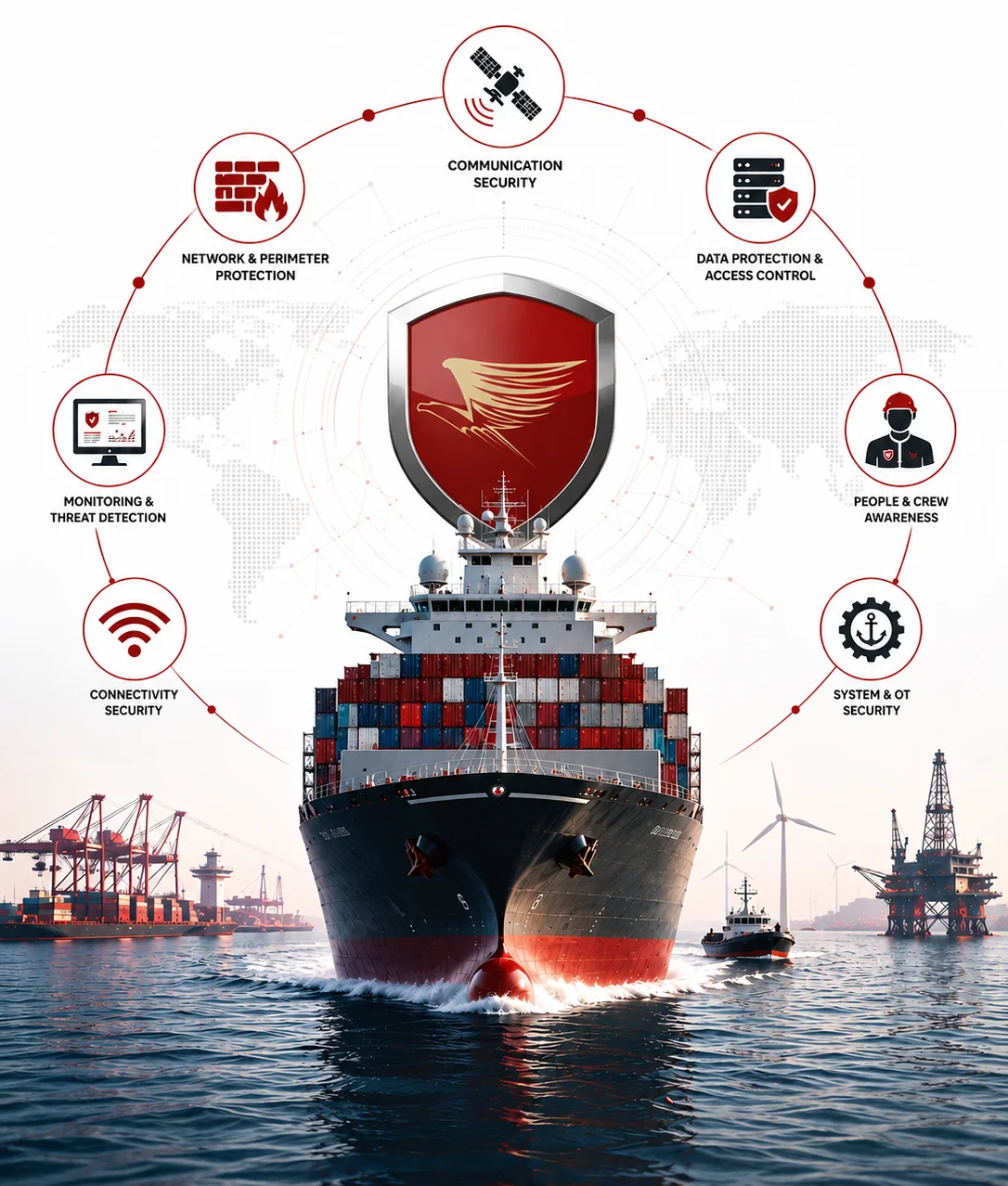
Vessels & Fleets
Shipboard IT & OT environments
Ports & Terminals
Connected maritime infrastructure
IT + OT Security
Converged cyber risk assessment
Compliance Ready
Maritime standards & frameworks
Cybersecurity for an industry where digital risk can become operational risk.
Modern maritime operations depend on interconnected information technology, operational technology, navigation, communications, cargo and shore-based systems.
As vessels, ports and maritime businesses become more connected, cybersecurity must extend beyond traditional enterprise IT. A weakness in an exposed application, remote-access channel, network, onboard system or third-party connection can affect confidentiality, integrity, availability and operational resilience.
- Assess vessel and shore-based attack surfaces.
- Evaluate connected IT, OT, applications and networks.
- Prioritize risks according to operational impact.

Where maritime cyber risk can originate
Maritime environments combine enterprise IT, shipboard operational systems, communications, third parties and physical operations. Effective maritime cybersecurity therefore considers both cyber exposure and operational impact.
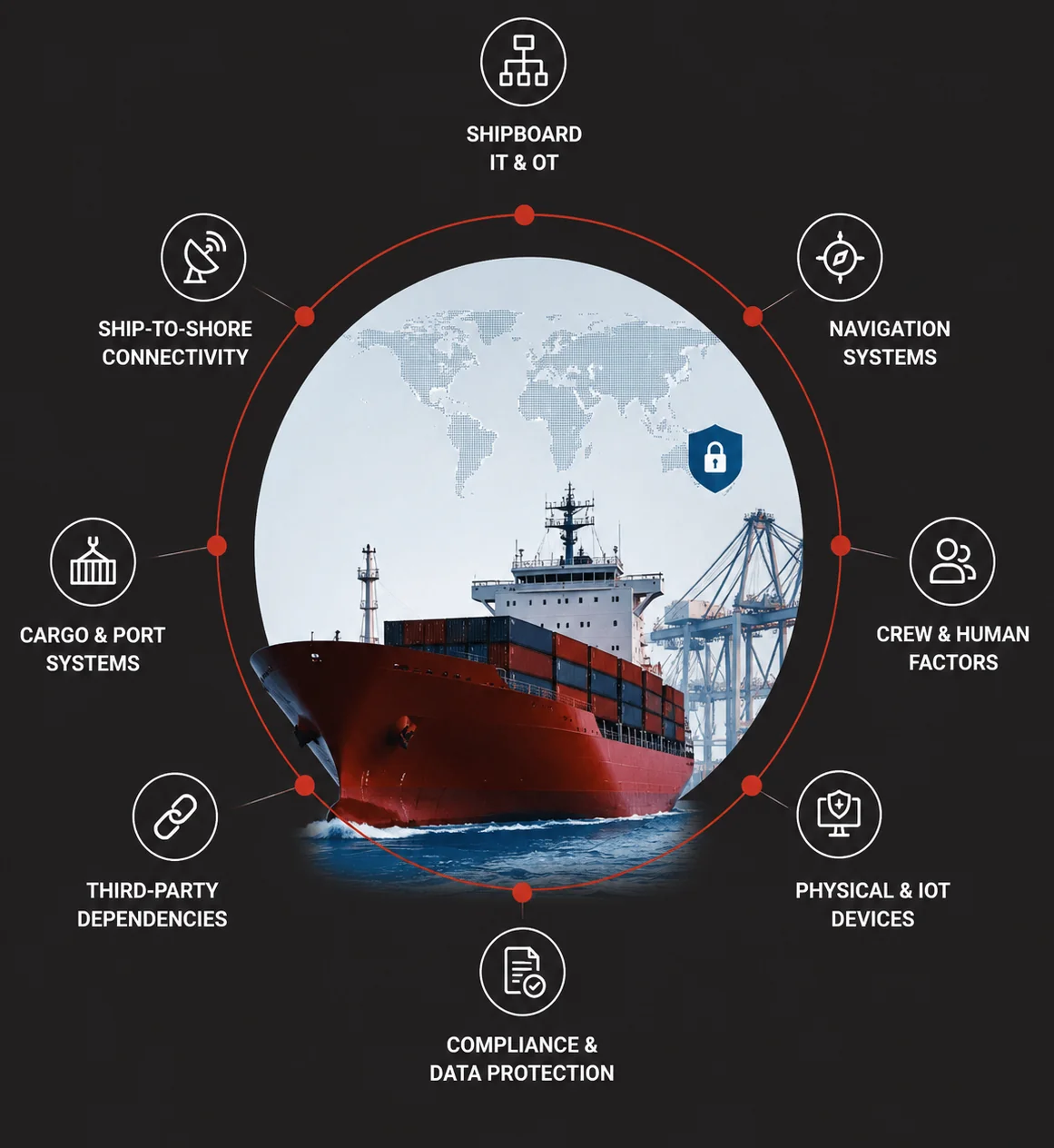
Shipboard IT & OT
Connected navigation, engineering, cargo and operational systems can create attack paths between environments.
Ship-to-Shore Connectivity
VSAT, remote access, fleet management and shore connectivity expand the maritime attack surface.
Navigation Systems
Navigation-related technologies require protection against unauthorized access, manipulation and availability risks.
Cargo & Port Systems
Cargo management, terminal applications and connected logistics platforms introduce additional digital dependencies.
Crew & Human Factors
Phishing, removable media, weak credentials, unauthorized devices and social engineering can become entry points.
Third-Party Dependencies
Vendors, equipment providers, shipyards, integrators and remote support channels can introduce supply-chain risk.
Security assessment across connected maritime systems
The exact assessment scope depends on vessel architecture, operational requirements, authorization and rules of engagement.
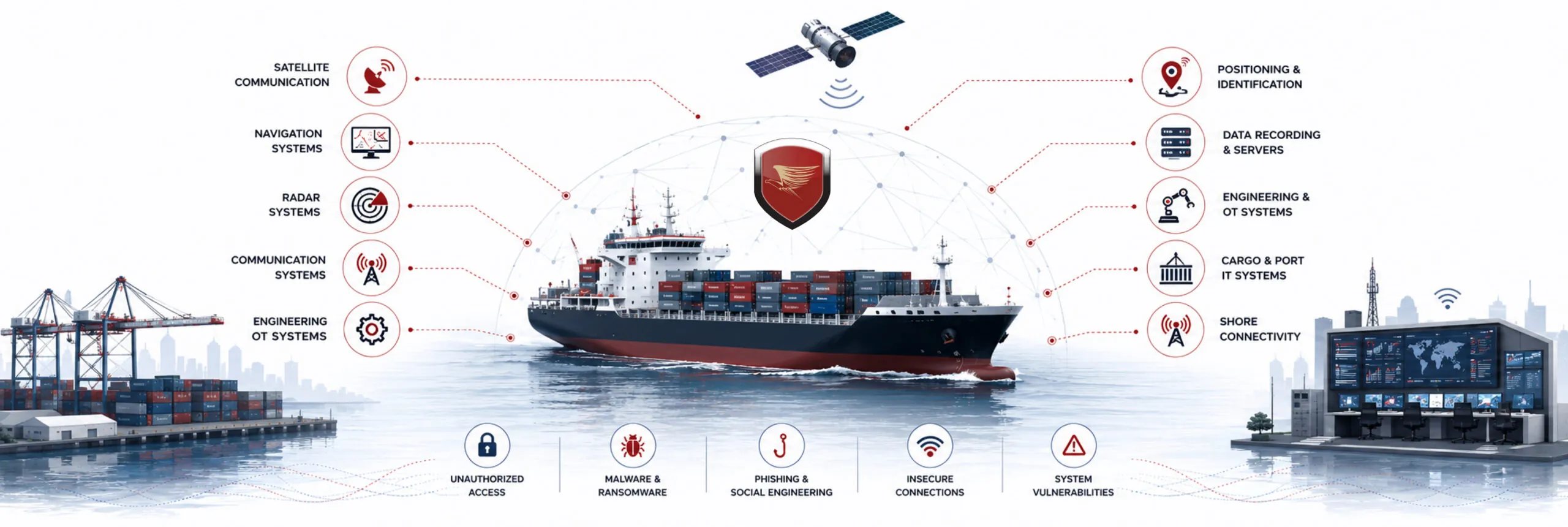
ECDIS
Electronic navigation and charting environments.
AIS & GNSS
Positioning, identification and navigation-related systems.
Radar Systems
Navigation and situational-awareness infrastructure.
VDR & Servers
Data recording, computing and supporting infrastructure.
GMDSS
Maritime communication and safety-related systems.
VSAT & Connectivity
Satellite communication and remote connectivity.
Engineering OT
Machinery, propulsion and operational control environments.
Cargo & Port IT
Cargo, terminal, logistics and supporting applications.
Cybersecurity services aligned to maritime risk
From identifying vulnerabilities to validating exploitable attack paths and strengthening governance, Varutra's cybersecurity services can be tailored to the maritime organization's environment and risk profile.
See the maritime environment as an interconnected attack surface.
Varutra's maritime cybersecurity engagements can connect risk assessment with technical validation across networks, applications, remote access, cloud services and relevant OT environments.
- Attack-surface discovery and vulnerability assessment
- Controlled penetration testing within approved scope
- Network segmentation and remote-access review
- Detection, remediation and revalidation

Maritime Cyber Risk Assessment
Identify cyber risks across vessels, shore systems, networks, applications, connectivity and supporting maritime operations.
- Asset and attack-surface discovery
- Threat and vulnerability analysis
- IT/OT risk assessment
- Business and operational impact analysis
- Risk prioritization and remediation roadmap
Maritime Penetration Testing
Validate whether identified weaknesses can be exploited within an approved scope and rules of engagement.
- External penetration testing
- Internal network testing
- Application penetration testing
- API security testing
- Controlled attack-path validation
Maritime Network Security
Assess network architecture, segmentation, remote access and security controls across connected maritime environments.
- Network architecture review
- Firewall ruleset assessment
- VPN and remote-access review
- Wireless security assessment
- Network segmentation assessment
Maritime OT & IoT Security
Assess connected operational technology and IoT environments while considering availability and operational safety.
- OT architecture assessment
- Industrial protocol review
- Segmentation assessment
- Remote access assessment
- OT security maturity evaluation
Maritime Application Security
Secure web, mobile, API and business applications used across fleet, cargo, logistics and maritime operations.
- Web application testing
- Mobile application testing
- API security testing
- Authentication assessment
- Authorization and access-control testing
Cloud Security
Assess cloud environments supporting fleet management, maritime applications, analytics and enterprise operations.
- Cloud configuration assessment
- Identity and access review
- Cloud vulnerability assessment
- Storage and data security
- Cloud architecture review
Maritime Red Teaming
Evaluate the effectiveness of preventive and detective controls through authorized adversary simulation.
- Attack-path analysis
- Initial-access simulation
- Privilege escalation testing
- Lateral movement assessment
- SOC detection evaluation
SOC & Threat Management
Strengthen continuous visibility, detection and response across maritime enterprise environments.
- Security monitoring
- Threat detection
- Incident investigation
- Threat intelligence
- Incident response support
Cybersecurity Compliance & GRC
Establish governance and control frameworks aligned with applicable maritime, cybersecurity and data protection requirements.
- Gap assessments
- Policy and procedure review
- Risk register development
- Control mapping
- Audit readiness
Security Maturity Assessment
Measure the current cybersecurity posture and develop a prioritized roadmap for measurable improvement.
- Current-state assessment
- Control maturity evaluation
- Gap identification
- Risk-based prioritization
- Target-state roadmap
Maritime Security Awareness
Strengthen human resilience against phishing, social engineering, unsafe device usage and cybersecurity incidents.
- Security awareness programs
- Phishing awareness
- Role-based awareness
- Incident reporting awareness
- Security culture improvement
Virtual CISO Services
Extend cybersecurity leadership for maritime organizations requiring strategic governance and security program management.
- Cybersecurity strategy
- Risk governance
- Security program management
- Board and management reporting
- Security roadmap development
Protect the technology that keeps maritime operations moving.
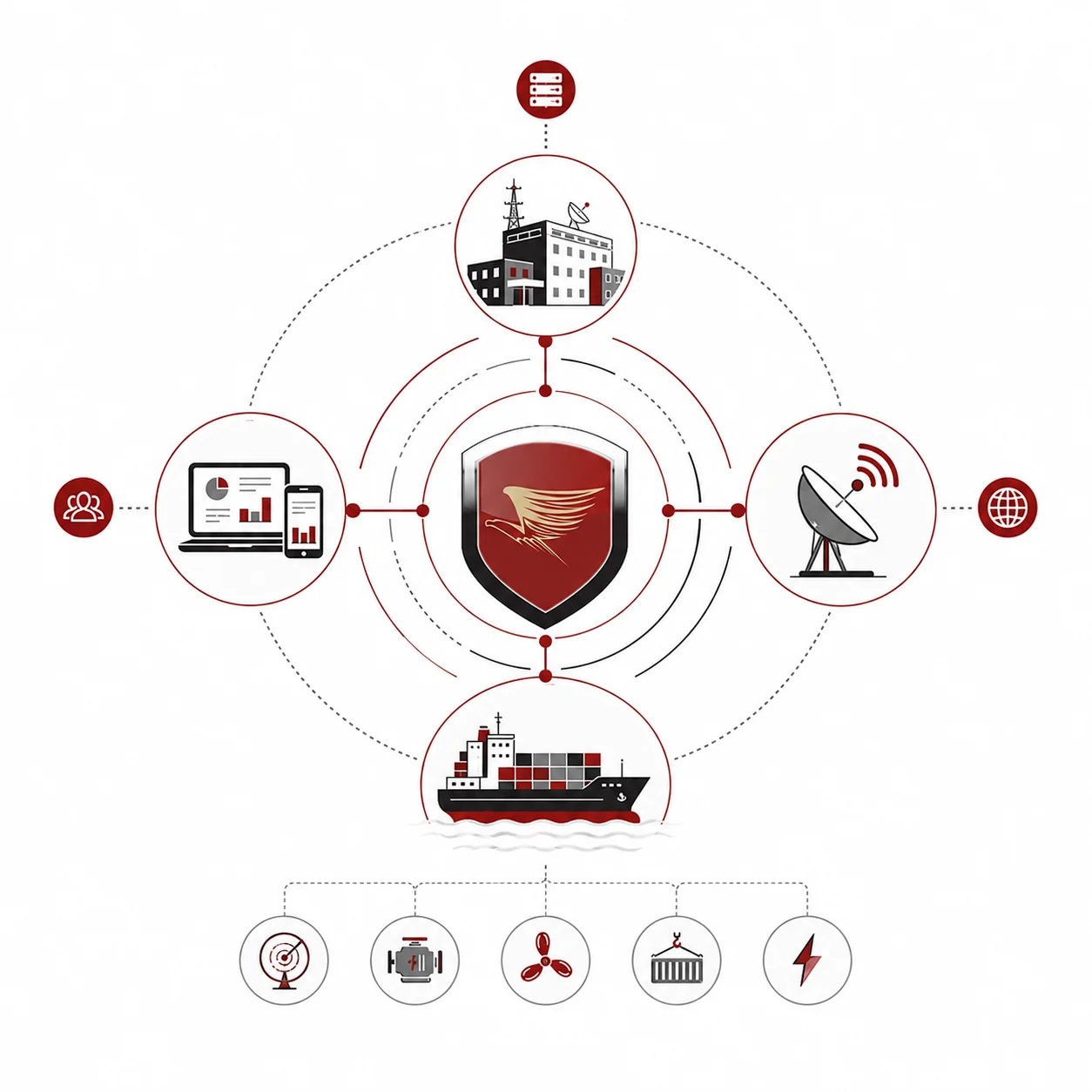
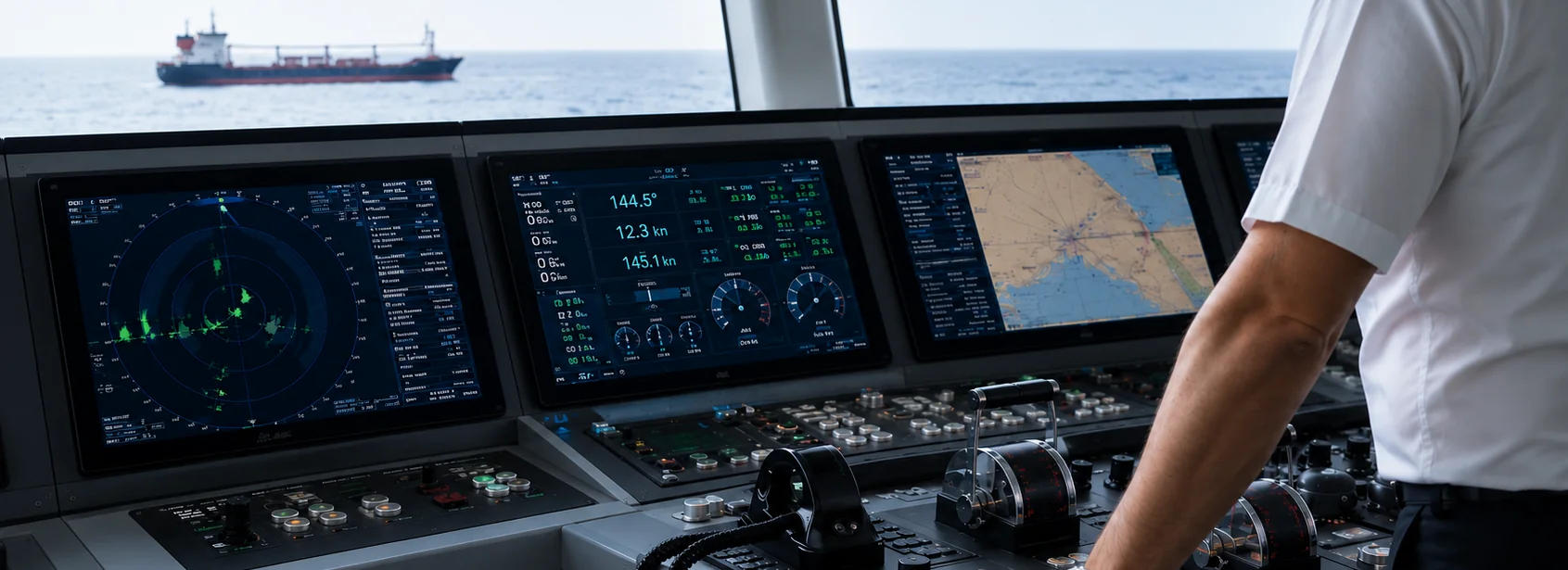
Maritime cybersecurity is not limited to corporate networks. Connected vessels can combine enterprise IT with operational technology supporting navigation, communications, machinery, propulsion, cargo and other critical functions.
Security assessments should therefore consider connectivity, segmentation, privileged access, remote support, third-party dependencies and the operational consequences of a security event.
- Enterprise IT, vessel networks and shore systems
- Navigation, engineering and operational technology
- Remote access, connectivity and third-party pathways
- Risk-based testing designed around authorized scope
Maritime cybersecurity regulatory standards
Maritime cybersecurity requirements are shaped by IMO guidance, IACS class requirements, industry frameworks and applicable national rules. The right scope depends on the vessel, flag, class, systems and operational context.
Common reference points include IMO cyber-risk guidance and MSC.428(98), IACS UR E26 and E27, BIMCO guidance, ISO/IEC 27001, IEC 62443 for relevant OT environments, and applicable flag-state or national requirements.
IMO Maritime Cyber Risk Management
Risk-based guidance for identifying, assessing, treating and continually managing cyber risks affecting maritime operations.
IMO Cyber Risk Management in the Safety Management System
Connects cyber-risk management with the vessel's Safety Management System and the International Safety Management framework.
IACS UR E26: Cyber Resilience of Ships
Defines cyber-resilience expectations for applicable ship design, construction and lifecycle cybersecurity controls.
IACS UR E27: Onboard Systems and Equipment
Addresses cyber resilience for onboard systems and equipment that support safe and reliable vessel operations.
BIMCO Cyber Security Guidance
Practical industry guidance for shipowners and operators covering governance, people, technology, risk and cyber hygiene.
IEC 62443 for Maritime OT Environments
A useful reference for securing relevant industrial automation and control environments, including segmentation, access and system security.
ISO/IEC 27001 Information Security
Provides an information security management framework for governance, risk management, controls and continual improvement.
Flag-State and National Cybersecurity Requirements
Additional cybersecurity, reporting, privacy or data-protection obligations may apply based on flag state, jurisdiction and operation.
What stronger maritime cyber resilience enables
Identify exposed assets, weak configurations, unnecessary services and vulnerable pathways.
Prioritize cybersecurity controls according to operational and business impact.
Map security controls and evidence to applicable regulatory and industry requirements.
Improve visibility, monitoring and response capabilities across connected environments.
From maritime cyber risk discovery to remediation
A structured engagement helps organizations understand what is exposed, determine what matters most and validate whether security improvements actually reduce risk.
Scope
Define systems, vessels, networks, applications and rules of engagement.
Discover
Identify assets, technologies, connectivity and potential attack surfaces.
Assess
Evaluate vulnerabilities, controls, architecture and cybersecurity maturity.
Validate
Perform controlled testing and validate exploitable weaknesses where authorized.
Improve
Deliver actionable remediation priorities and validate improvements.
Cybersecurity for the wider maritime ecosystem
Maritime cyber risk extends beyond the vessel itself. Security programs should consider the connected ecosystem supporting maritime operations.
Shipowners & Operators
Strengthen vessel, fleet and shore-based cybersecurity while improving risk visibility.
Ports & Terminals
Assess connected infrastructure, applications, networks, OT and operational dependencies.
Shipyards
Integrate cybersecurity considerations throughout vessel development and technology integration.
Maritime Technology Providers
Identify application, product, API, network and system-level cybersecurity weaknesses.
Equipment Suppliers
Improve cybersecurity assurance for connected onboard systems and equipment.
Logistics & Maritime Services
Secure digital platforms and data flows supporting maritime supply-chain operations.
Varutra's maritime cybersecurity approach can address vessels, fleets, ports, terminals, shipyards, maritime technology providers, equipment suppliers and supporting logistics environments through risk assessment, security testing, OT security, compliance and cyber resilience services.
Frequently Asked Questions About Maritime Cybersecurity
Find answers to common questions about maritime cybersecurity, vessel security assessments, IT and OT environments, IACS requirements and maritime cyber risk management.
Maritime cybersecurity protects the information technology (IT), operational technology (OT), connected systems, networks, applications and data used across ships, ports, maritime operators and supply chains from cyber threats. It combines cyber risk management, security assessment, technical testing and resilience measures to reduce the potential impact of cyber incidents on safety, operations and business continuity.
A maritime cybersecurity assessment can evaluate vessel and shore-based IT and OT environments, network architecture, segmentation, remote access, connected systems, applications, cloud services, third-party connections and security controls. Depending on the approved scope, it may also assess navigation, communication, cargo, engineering and other operational systems to identify vulnerabilities, cyber risks and potential attack paths.
Depending on vessel architecture and approved scope, a vessel cybersecurity assessment may cover ECDIS, AIS, GNSS, radar, VDR, GMDSS, VSAT, onboard networks, cargo systems, engineering and machinery systems, remote access, crew networks and ship-to-shore connectivity. The assessment should also consider how these systems interact with enterprise IT, OT and third-party services.
Yes. Maritime cybersecurity should consider both information technology (IT) and operational technology (OT), including how systems are connected and how a cyber incident could affect vessel operations, safety or business continuity. Assessments may examine network segmentation, remote access, system dependencies, third-party connections and controls protecting critical operational environments.
IACS UR E26 addresses the cyber resilience of ships, while UR E27 addresses the cyber resilience of onboard systems and equipment. They establish cybersecurity requirements relevant to the design, construction, integration and operation of applicable new ships and onboard systems. The current revised requirements should be considered when determining the cybersecurity expectations applicable to a specific vessel, system or project.
Depending on the organization's role, vessel type and scope, relevant maritime cybersecurity requirements and standards may include IMO maritime cyber risk management guidance, IMO Resolution MSC.428(98), the ISM Code, IACS UR E26 and E27, BIMCO industry guidance, ISO/IEC 27001, IEC 62443 for relevant OT environments and applicable national cybersecurity requirements. The appropriate requirements should be determined based on the organization's operational and regulatory context.
Varutra helps maritime organizations identify, validate and reduce cybersecurity risk across vessels, fleets, ports and connected maritime environments. Services can include maritime cyber risk assessments, vulnerability assessments, penetration testing, network and OT security assessments, application and cloud security testing, compliance and maturity assessments, red teaming, SOC and threat management, incident response and security awareness.
Build a maritime cybersecurity program around real operational risk.
Discuss your maritime cybersecurity requirements with Varutra and identify the right assessment approach for your vessels, fleet, port infrastructure, applications, networks and connected OT environments.
Assess Your Maritime Cyber Risk
Complete the form below and our maritime cybersecurity team will get in touch with you.
We respect your privacy. Your information will be kept confidential and handled securely.