

Network Security Services & Network VAPT
Strengthen your infrastructure with our Specialized Network Security Services. We identify exposed attack surfaces, validate exploitable vulnerabilities, remove false positives and provide practical remediation guidance across enterprise network environments.
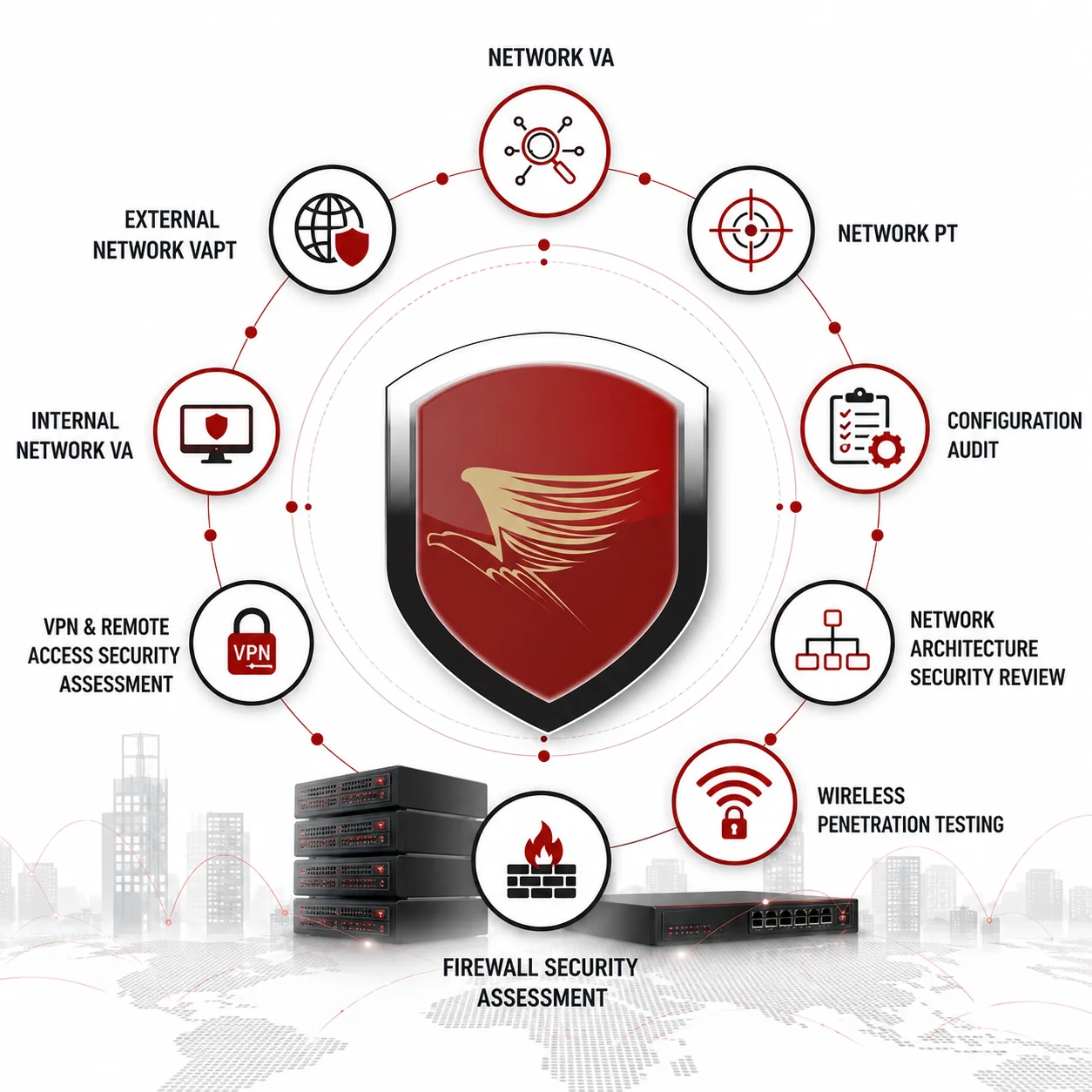
External Attack Surface
Internet-facing systems and perimeter exposure
Internal Infrastructure
Hosts, segments, services and trust paths
Network Controls
Firewalls, routers, switches and configurations
Remote Connectivity
VPN, wireless and remote-access security
What Is Network VAPT?
In simple terms, Network VAPT identifies vulnerabilities in your network infrastructure. It also validates which findings an attacker could actually exploit.
Varutra's network security experts assess internal and external networks, and perform configuration audit on network devices, firewall ruleset reviews, VPNs, wireless infrastructure and remote-access systems. As a result, the assessment covers discovery, vulnerability assessment, controlled exploitation, reporting and remediation validation.
Vulnerability Assessment
- Discover hosts, ports, services and network exposure
- Identify vulnerabilities and insecure configurations
- Review firewall, router, switch, VPN and wireless security gaps
- Prioritize findings by severity, exploitability and business impact
Penetration Testing
- Manually validate significant vulnerabilities
- Demonstrate exploitability with controlled proof-of-concept testing
- Assess realistic attack paths within the approved scope
- Provide remediation guidance and verify fixes through reassessment
What Can Network VAPT Identify?
The exact findings depend on the environment and scope. Typical areas of investigation include:
Exposed Services & Ports
Unnecessary, outdated or externally reachable services that increase the attack surface.
Weak Authentication & Access
Authentication, authorization and management-access vulnerabilities affecting network devices and remote access.
Vulnerable Network Services
Known vulnerabilities, insecure protocols, outdated software and exposed administrative interfaces.
Segmentation Weaknesses
Trust-boundary and access-path vulnerabilities that may permit unauthorized lateral movement.
Wireless Security Gaps
Weak wireless authentication, encryption, configuration or access controls within scope.
VPN & Remote Access Exposure
Security vulnerabilities in remote-access gateways, configurations and exposed entry points.
Our Network Security Services
Varutra provides Network Security Services and Network VAPT to identify vulnerabilities, misconfigurations and exposed attack paths across internal and external networks, firewalls, wireless networks, VPNs and remote-access systems. We discover, assess, validate and prioritize network risks, providing actionable remediation guidance and retesting to verify security improvements.
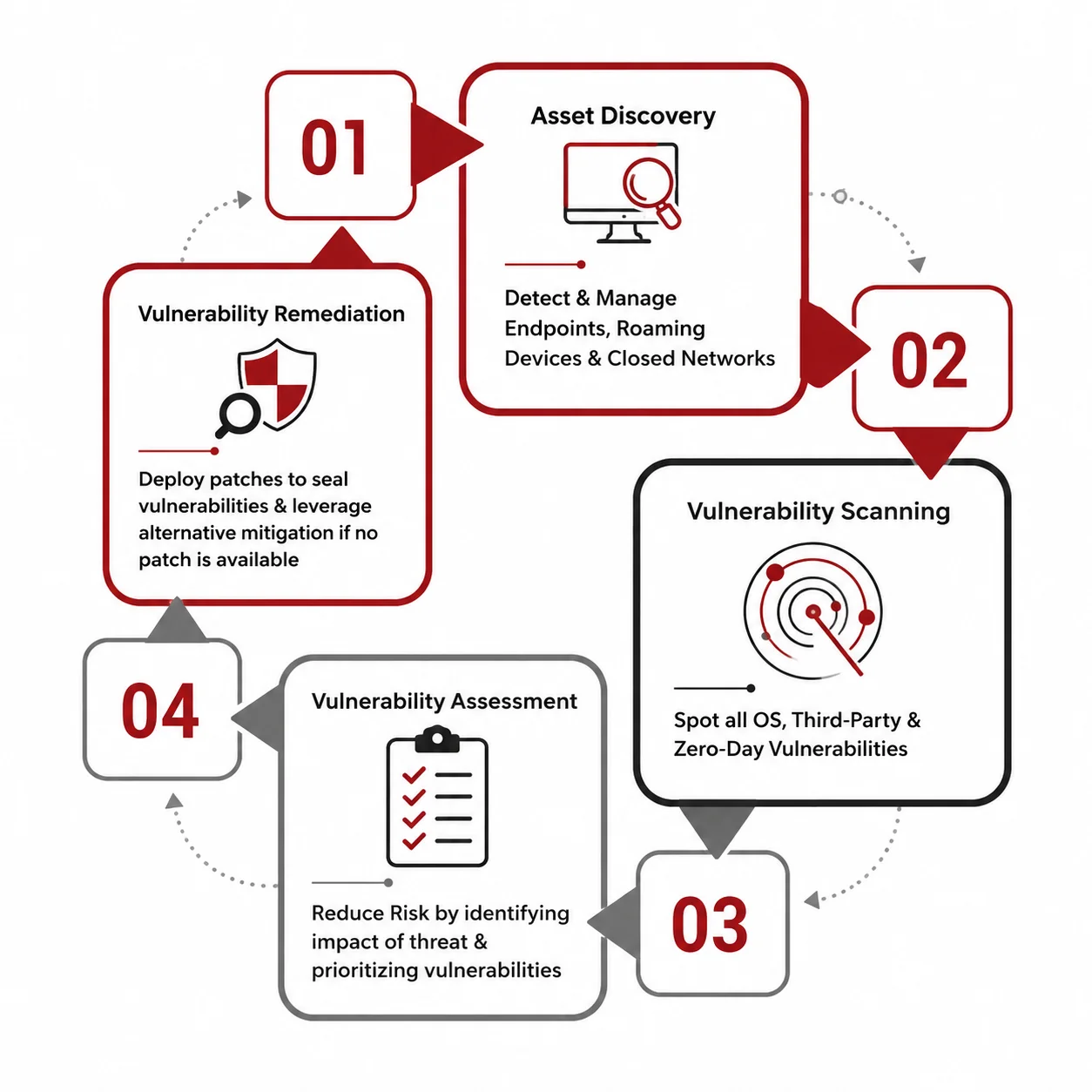
Network Vulnerability Assessment
Network Vulnerability Assessment systematically identifies security vulnerabilities across approved internal and external network assets. The assessment covers hosts, ports, services, operating systems, network devices, exposed interfaces and other network infrastructure that may increase your attack surface.
Varutra's assessment combines vulnerability discovery with security analysis and finding validation to identify known vulnerabilities, insecure services, weak configurations and unnecessary exposure. Findings are prioritized using severity, exploitability, affected assets and business context, helping security teams focus remediation on the vulnerabilities that represent the greatest risk.

Network Penetration Testing
Network Penetration Testing goes beyond vulnerability discovery to determine whether significant network vulnerabilities can actually be exploited. Within an approved scope and defined rules of engagement, controlled testing validates vulnerabilities, attack paths and potential security impact.
Varutra's security testers assess how vulnerabilities may be chained or used to obtain unauthorized access, move between network segments or reach higher-value systems. The objective is to provide evidence-based insight into real-world risk while maintaining controlled testing boundaries and minimizing operational impact.

Device Configuration Audit
Device Configuration Audit reviews the security configuration of servers, workstations, laptops, endpoints and other applicable devices to identify configuration weaknesses, insecure settings, excessive privileges, unnecessary services and hardening gaps.
The review can assess user and administrative access, password policies, security controls, enabled services, system settings, logging, endpoint protection, update configurations and other applicable device-level controls against relevant organizational requirements and recognized security hardening practices. The result is a prioritized roadmap for strengthening device security and reducing avoidable configuration-related risk.
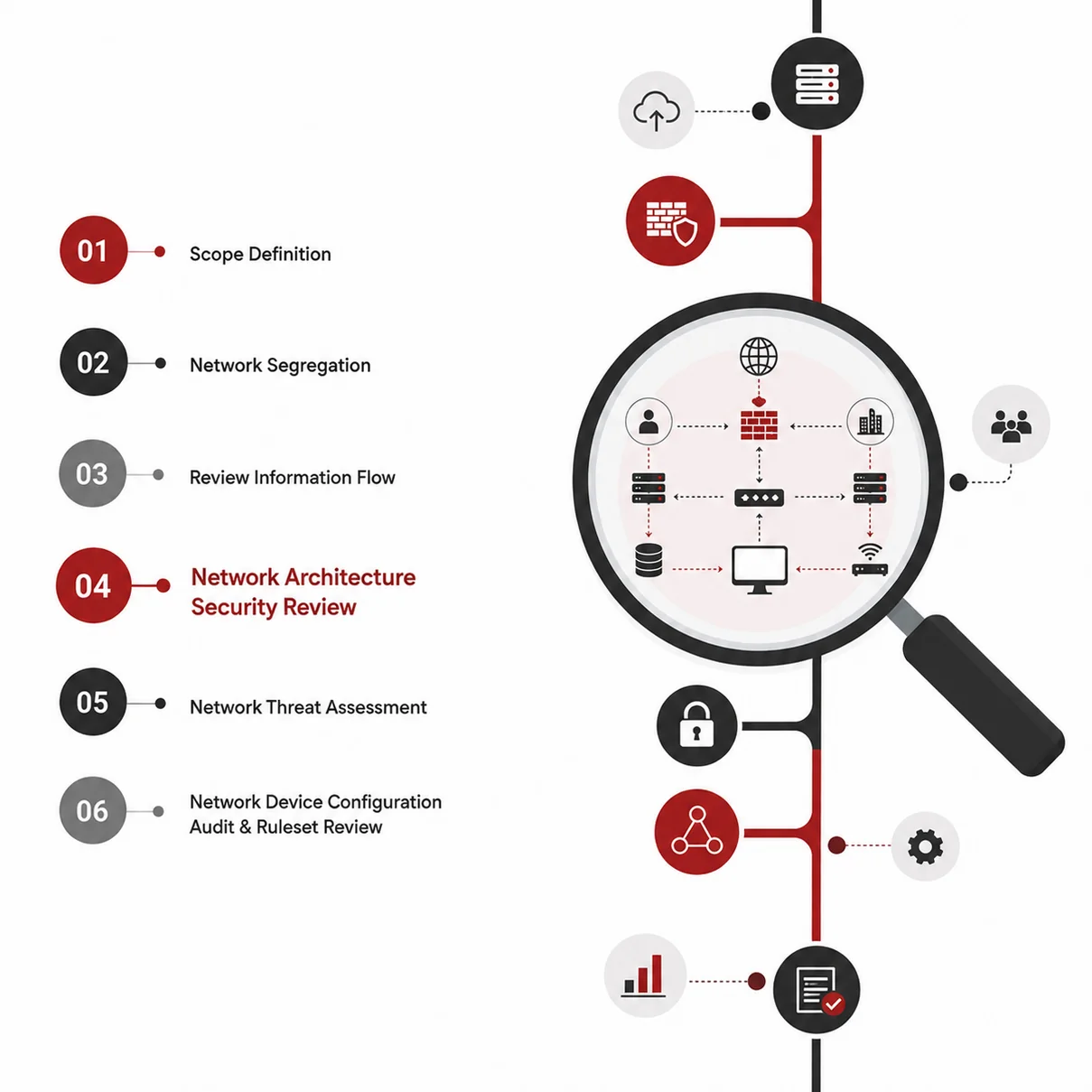
Network Architecture Security Review
Network Architecture Security Review evaluates the security of your network design, including network zones, trust boundaries, segmentation, data flows, access paths and the placement of security controls. It helps identify architecture-level vulnerabilities that may not be visible through vulnerability scanning alone.
Varutra reviews how critical systems, user networks, servers, security devices and external connections interact to identify excessive trust relationships, weak segmentation and potential lateral-movement paths. Recommendations focus on strengthening defense-in-depth, reducing unnecessary access and improving the resilience of the network architecture.

Wireless Penetration Testing
Wireless Penetration Testing assesses the security of enterprise wireless networks, including Wi-Fi authentication, encryption, access controls, access-point configuration and wireless network exposure. The objective is to determine whether vulnerabilities could allow unauthorized access to corporate wireless infrastructure.
Within the approved testing environment, Varutra assesses wireless security controls and identifies vulnerabilities involving authentication, encryption, network access and segmentation. The findings help organizations strengthen Wi-Fi security, reduce unauthorized access risks and better isolate wireless networks from sensitive internal resources.

External Network VAPT
External Network VAPT evaluates an organization's internet-facing attack surface from an external attacker perspective. Testing can include approved public IP addresses, exposed ports, network services, perimeter devices, remote-access entry points and other internet-facing infrastructure.
Varutra identifies vulnerabilities, insecure configurations, exposed services and perimeter weaknesses and validates significant findings through controlled security testing. This helps organizations understand how an external attacker could potentially gain access to the network and which exposures should be addressed first.

Internal Network VA
Internal Network VA identifies security vulnerabilities across approved internal systems, servers, network services, network segments and other accessible assets within the organization's internal environment.
The assessment examines vulnerabilities such as outdated software, missing security patches, insecure services, weak configurations, exposed ports and other weaknesses that could increase the risk of unauthorized access or compromise. The findings provide security teams with prioritized remediation guidance to strengthen the security of the internal network and reduce exposure to known vulnerabilities.

VPN & Remote Access Security Assessment
VPN and Remote Access Security Assessment evaluates the security controls protecting remote connectivity, including VPN gateways, remote-access services, authentication mechanisms and applicable configurations. It helps identify vulnerabilities that could expose corporate networks through remote entry points.
Varutra reviews remote-access security controls such as authentication, authorization, exposed management interfaces, encryption configurations and access restrictions within the approved scope. The assessment provides prioritized recommendations to strengthen remote connectivity while reducing unauthorized network access risk.
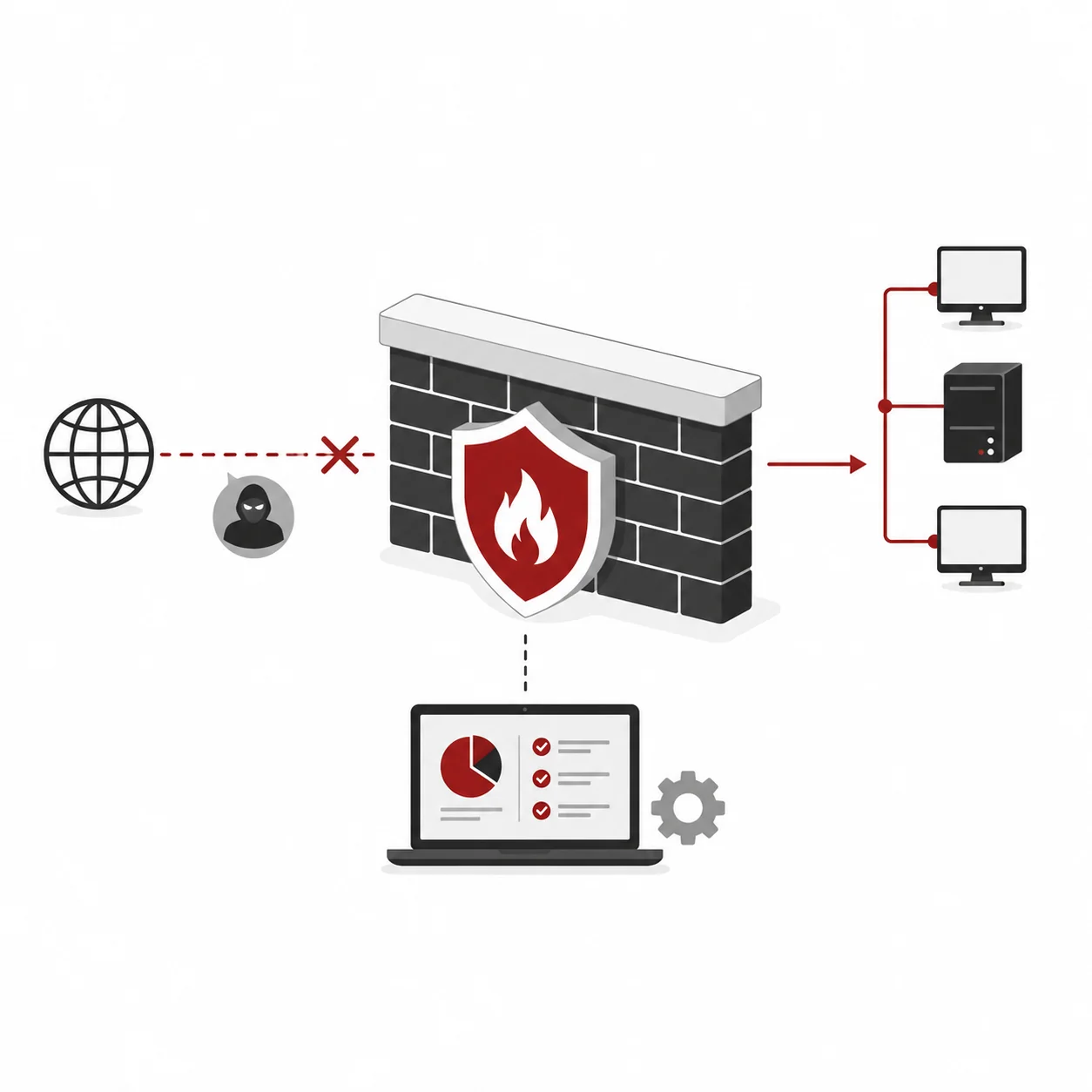
Firewall Security Assessment
Firewall Security Assessment reviews firewall rulebases, access control lists, network zones, exposed services and management access to identify unnecessary exposure and overly permissive network access. The assessment helps determine whether firewall controls effectively enforce the intended security boundaries.
Varutra reviews applicable firewall and network security configurations to identify excessive permissions, redundant or unnecessary rules, insecure management exposure and other control weaknesses. The resulting remediation guidance helps organizations reduce attack surface, strengthen network segmentation and improve the security of both perimeter and internal network traffic.
A Structured, Risk-Based Approach to Network VAPT
Our Network VAPT methodology combines network discovery, vulnerability assessment, controlled penetration testing, risk prioritization, reporting and remediation validation.
Hover or tap a step title to expand it and see full details
- Step 01
Scoping & Rules of Engagement
Before testing begins, we define your network attack surface and business-critical assets. We also identify the threat actors most likely to target your organization.
- Stakeholder discussion to confirm scope & rules of engagement
- Identify in-scope IP ranges, domains & network segments
- Align the testing approach with applicable security and compliance requirements
- Step 02
Network Discovery & Enumeration
Next, we map live hosts, exposed services and network architecture. This creates a clear view of the real network attack surface.
- Host, port & service enumeration across the network
- Identify exposed devices, protocols & entry points
- Fingerprint OS, firmware & software versions in use
- Step 03
Vulnerability Assessment
During this stage, authenticated and unauthenticated scans identify potential weaknesses. We then manually verify the results to remove false positives and identify exploitable issues.
- Automated scanning across network, wireless & VPN layers
- Manual triage to eliminate false positives
- Firewall & device configuration review against CIS benchmarks
- Step 04
Controlled Exploitation & Penetration Testing
Once significant vulnerabilities are validated, our consultants safely test their exploitability. This helps demonstrate real business impact rather than relying only on theoretical risk scores.
- Controlled exploitation with proof-of-concept evidence
- Lateral movement & privilege escalation testing
- Assess potential for data exfiltration & service disruption
- Step 05
Risk Prioritization & Reporting
At this stage, each finding is assessed using CVSS severity and business impact. The results are then converted into a clear remediation roadmap that your team can act on.
- CVSS-based severity scoring for every finding
- Executive summary & detailed technical report
- Step-by-step remediation guidance per vulnerability
- Step 06
Remediation Validation & Reassessment
After remediation, we retest the identified vulnerabilities. This confirms whether the fixes work and provides documented closure evidence for the engagement.
- Reassessment of identified vulnerabilities after remediation, based on the agreed engagement scope
- Updated report & closure confirmation
- Engagement completion and retest documentation
Structured Testing Aligned to Recognized Security Guidance
Where applicable to the engagement scope, testing and configuration review can be informed by recognized security guidance and assessment practices.
NIST SP 800-115
Technical guidance for planning and conducting information security testing and assessment, including vulnerability scanning, penetration testing, analysis and mitigation planning.
View NIST SP 800-115CIS Benchmarks
Where a relevant benchmark exists for the technology in scope, configuration review can consider applicable CIS secure configuration recommendations for network devices and related infrastructure.
View CIS BenchmarksClear Outputs for Security Teams & Decision Makers
Every engagement is designed to turn technical findings into prioritized actions your teams can execute.
From finding to documented closure.
Network VAPT deliverables translate technical observations into evidence, risk priorities, remediation actions and reassessment results.
Get an AssessmentExecutive Network Risk Summary
High-level view of network exposure and prioritized risk.
Detailed Network VAPT Report
Detailed findings, affected assets and supporting evidence.
CVSS-based Severity & Risk Ratings
Severity and risk context for remediation planning.
Proof-of-Concept Evidence
Validated evidence for significant findings where applicable.
Prioritized Remediation Roadmap
Technical recommendations aligned to identified risk.
Retest & Closure Confirmation
Retest results and engagement completion documentation.
Network security testing built around validated risk.
Varutra is a network security services provider trusted for scope-specific testing, manually validated findings and business-aware risk prioritization. Our Network VAPT approach helps security and infrastructure teams move from attack-surface discovery to validated risk, remediation and documented closure.
Scope-Specific, Manually Validated Testing
Testing is scoped to your approved assets, network segments, access paths and rules of engagement, and significant findings are manually reviewed to distinguish real, exploitable vulnerabilities from scanner noise.
Hacker-Approached Penetration Testing
Controlled, authorized exploitation demonstrates how validated vulnerabilities could realistically be chained or exploited by an attacker within the agreed testing scope.
Business-Aware Risk Prioritization
Findings are translated into practical, ranked remediation priorities using technical severity, exploitability, affected assets and business context, not a raw vulnerability count.
Remediation Validation & Retesting
Reassessment confirms whether identified vulnerabilities have actually been fixed, giving security and compliance teams clear, evidence-based closure.
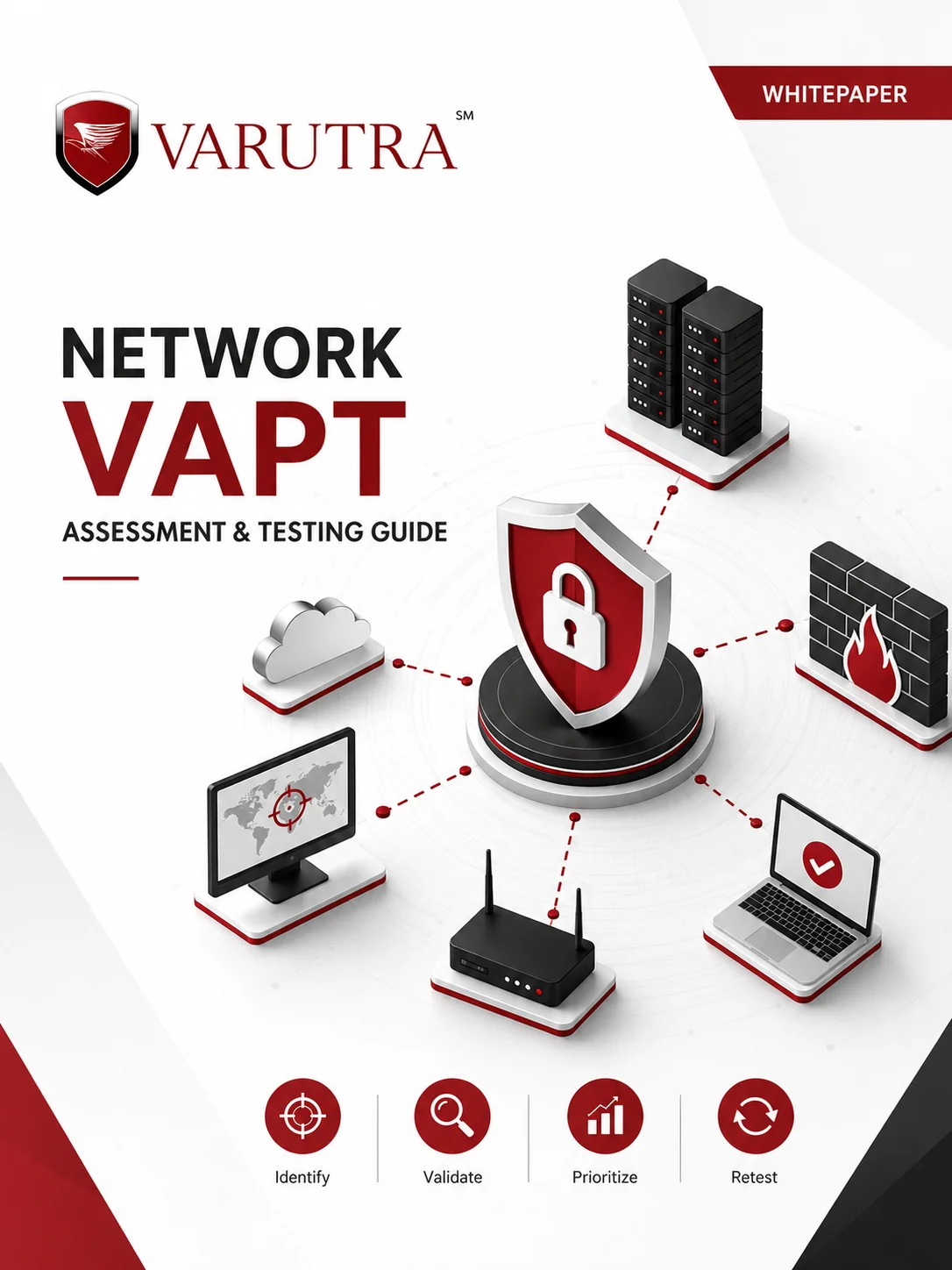
Network VAPT Assessment & Testing Guide
Version 1.0 • Updated August 2026 • PDF Guide
Understand how to scope a Network VAPT engagement, map the network attack surface, validate vulnerabilities, prioritize risk and retest remediation across internal and external infrastructure.
Network VAPT for Security Assurance & Compliance
Network VAPT can provide independent testing evidence and remediation documentation that may support applicable security, contractual and regulatory requirements. Applicability and required testing scope vary by organization and regulation.
Frequently Asked Questions About Network Security & VAPT
Find answers to common questions about Network Security Assessment, Network Vulnerability Assessment, Network Penetration Testing and Network VAPT services.
Network VAPT is a security assessment that combines Network Vulnerability Assessment and controlled Network Penetration Testing to identify, validate and prioritize security weaknesses across an organization's approved network infrastructure. Depending on scope, testing can cover internet-facing and internal systems, servers, network devices, firewalls, VPNs, wireless networks, exposed services, configurations and segmentation. Significant vulnerabilities can be manually validated to determine exploitability, attack paths and potential business impact.
Network Vulnerability Assessment identifies and prioritizes security weaknesses across approved network assets, services, systems and configurations. Network Penetration Testing goes further by safely attempting to exploit selected vulnerabilities to validate whether they are actually exploitable and determine potential attack paths and impact. Network VAPT combines both approaches for broader network security validation.
External Network VAPT evaluates internet-facing systems, public IP addresses, exposed services, perimeter devices and remote-access infrastructure from an external attacker perspective. Internal Network VAPT assesses approved internal systems, servers, network segments, services, trust relationships and access controls to identify weaknesses that could enable unauthorized access, privilege escalation or lateral movement. Organizations may perform both assessments for comprehensive network security coverage.
A Network Security Assessment can evaluate network architecture, exposed services, operating systems, network devices, firewalls, routers, switches, VPNs, wireless networks, authentication, access controls, security configurations, segmentation and vulnerability exposure. The exact scope is defined according to the organization's infrastructure, objectives and approved testing requirements.
Network VAPT uses network discovery, service enumeration, vulnerability assessment, configuration analysis and controlled penetration testing to identify security weaknesses. Findings are evaluated based on factors such as severity, exploitability, affected assets, exposure, attack paths and potential business impact. This helps security teams prioritize remediation based on actual risk rather than vulnerability counts alone.
Network VAPT pricing depends on the assessment scope, number of IP addresses and assets, network segments, internal and external coverage, infrastructure complexity, testing depth, wireless or VPN testing requirements, reporting needs and retesting. A tailored quotation based on the approved scope provides a more accurate estimate than a fixed per-asset price.
Network VAPT deliverables typically include an executive security summary, detailed vulnerability findings, severity and risk ratings, affected assets, technical evidence and validated proof-of-concept details where applicable. Reports also include remediation recommendations and, when included in scope, remediation validation or retesting results to help organizations reduce network security risk.
Ready to Assess Your Network Security?
Get a clear, prioritized view of your network attack surface with Network Vulnerability Assessment, Network Penetration Testing, configuration review and remediation validation.
Download Network VAPT Guide (Free)
We respect your privacy. Your information will be kept confidential and handled securely.