

Healthcare & Life Sciences Cybersecurity Services in India
Protect patient data, clinical systems, pharmaceutical research, medical devices and digital health platforms with risk-based cybersecurity services. Varutra helps healthcare and life sciences organizations identify cyber risk, validate vulnerabilities, strengthen security controls and build cyber resilience without losing sight of patient safety and business continuity.
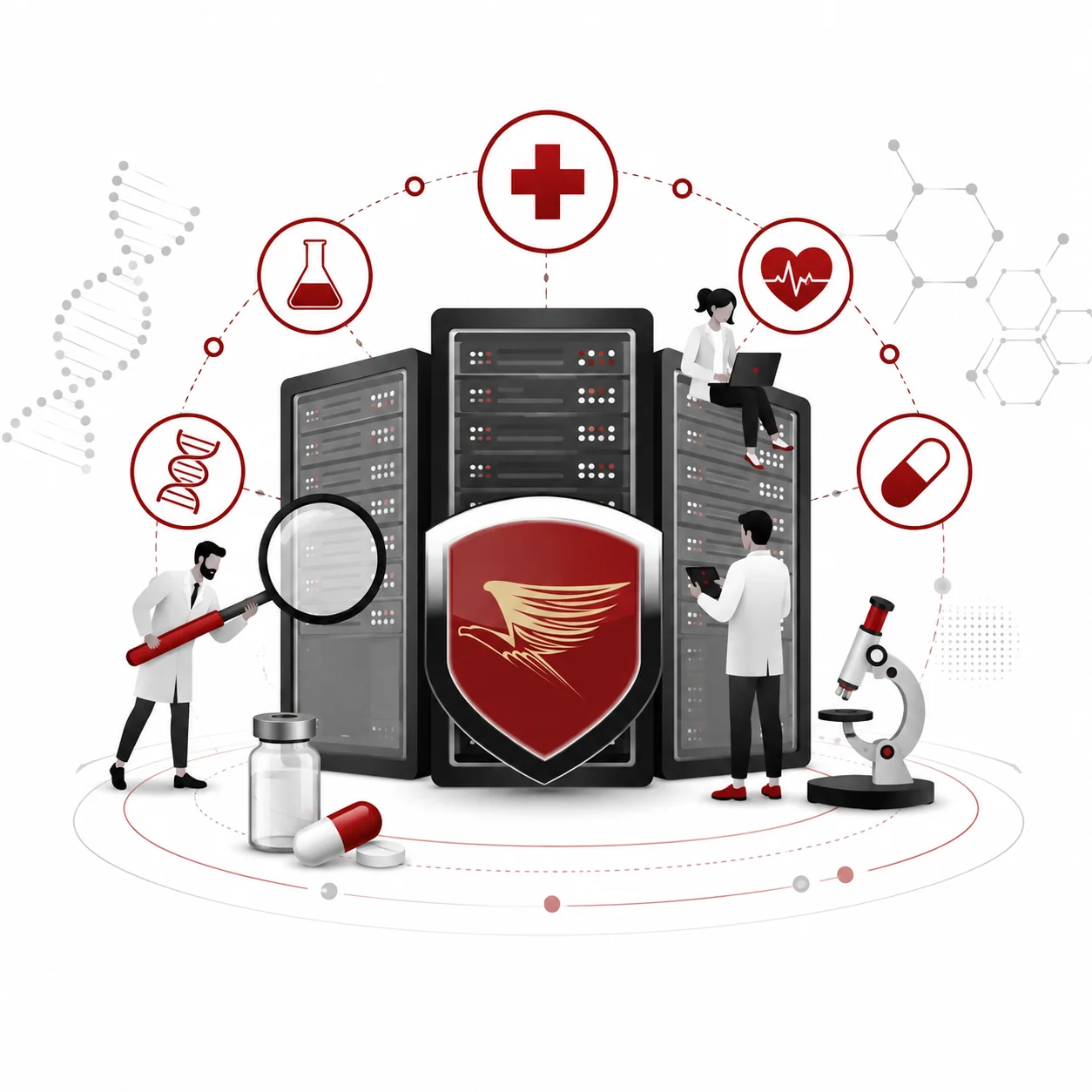
Securing the Connected Healthcare Ecosystem
Cybersecurity services for the healthcare and life sciences ecosystem.
HOSPITALS & PROVIDERS
Hospitals, clinics, diagnostic centres, care networks and connected clinical environments
PHARMA
Pharmaceutical manufacturers, R&D, commercial operations and regulated data environments
BIOTECH & LIFE SCIENCES
Biotechnology, genomics, research data, laboratories and scientific technology platforms
MEDICAL DEVICES
Connected medical devices, firmware, device ecosystems, applications and supporting infrastructure
DIGITAL HEALTH
Telehealth, patient portals, healthtech applications, mobile platforms and APIs
CLINICAL RESEARCH
Clinical research organizations, trial platforms, research data and third-party ecosystems
HEALTH INSURANCE
Insurers, claims platforms, member data, partner integrations and digital services
HEALTHCARE GCCs
Global capability centres and technology teams supporting healthcare and life sciences operations
Healthcare cybersecurity protects patient information, clinical applications, connected medical devices, research data, pharmaceutical systems and digital health services from cyber threats while supporting safe and reliable care.
The healthcare and life sciences attack surface extends across electronic health records, patient portals, laboratory and diagnostic systems, pharmacy platforms, research environments, cloud workloads, APIs, medical devices, remote access, identities and third-party services. A weakness in one connected layer can create risks for confidentiality, integrity, availability and operational continuity.
Varutra helps organizations identify and reduce these risks through vulnerability assessment and penetration testing, application and API security testing, cloud and infrastructure assessments, medical device and IoT security, security monitoring, incident response, GRC and strategic security advisory.
Because patient care, research, manufacturing and digital health increasingly depend on interconnected systems and sensitive data. Cybersecurity helps identify exploitable weaknesses, protect critical information, strengthen resilience and reduce the likelihood that a cyber incident disrupts clinical or business operations.
Why Do Healthcare & Life Science Organizations Need Cybersecurity?
Healthcare and life sciences organizations face cyber risks across patient data, clinical systems, medical devices, research, cloud and third parties. Strong cybersecurity protects patient safety, sensitive data, intellectual property and business continuity.
Of healthcare ransomware attacks were linked to exploited vulnerabilities
Exploited vulnerabilities were the most common technical root cause identified in Sophos' 2025 healthcare ransomware research.
Sophos 2025 Healthcare Research ↗Of healthcare providers paid a ransom after a ransomware attack
More than one-third of surveyed healthcare providers paid a ransom in 2025, highlighting the need for ransomware resilience and recovery planning.
Sophos 2025 Findings ↗Mean healthcare ransomware recovery cost in 2025
The mean recovery cost was $1.02 million, excluding ransom payments, demonstrating the operational and financial impact of healthcare cyberattacks.
View Sophos Research ↗What Are the Biggest Cybersecurity Risks in Healthcare & Life Sciences?
The healthcare and life sciences attack surface extends from patient information and clinical infrastructure to connected medical devices, pharmaceutical research, digital health platforms and supply chains. The most critical risks include:
Patient Data Breaches & Identity Theft
Patient health records, personally identifiable information and insurance data are high-value targets for cybercriminals. Weak access controls, exposed applications or compromised credentials can lead to data breaches, privacy violations and identity theft.
Ransomware & Clinical Disruption
Ransomware can take critical hospital systems, electronic health records, diagnostic services and shared infrastructure offline, disrupting clinical workflows, delaying care and creating significant financial and operational impact.
Medical Device & IoT Attacks
Connected medical devices, diagnostic equipment, IoT systems and supporting software can introduce exploitable vulnerabilities. Compromise can expose sensitive data, disrupt operations or create patient-safety risks.
Research, Clinical Data & IP Theft
Pharma, biotech and life sciences organizations hold valuable clinical trial data, genomic information, drug research and intellectual property. Cyberattacks can result in data theft, research disruption, manipulation or competitive loss.
Third-Party & Supply Chain Compromise
Hospitals and life sciences organizations depend on cloud providers, CROs, laboratories, technology vendors and other partners. A compromised third party can become an indirect route to systems, sensitive data and critical operations.
Exposed Applications, APIs & Cloud
Patient portals, telehealth platforms, mobile apps, APIs and cloud environments expand the external attack surface. Vulnerabilities and misconfigurations can enable unauthorized access, data exposure and attacks on critical healthcare services.
Security assessment across the Healthcare & Life Sciences ecosystem.
Assessment scope can be tailored to the organization's clinical, research, manufacturing, digital health and technology environment, authorization and rules of engagement.
Healthcare Applications & Patient Platforms
Patient portals, hospital applications, provider platforms, claims systems and business-critical web services.
Mobile & Telehealth
Healthcare mobile apps, telemedicine clients, local storage, authentication and communication security.
APIs & Integrations
FHIR (Fast Healthcare Interoperability Resources) and healthcare APIs, partner integrations, authorization, data flows and service-to-service trust.
Cloud & SaaS
Cloud configuration, IAM, workloads, storage, exposed services, architecture and healthcare data security.
Hospital Networks
Internal and external networks, servers, firewalls, wireless environments, remote access and segmentation.
Medical Devices & IoT
Connected devices, firmware, communications, device interfaces and companion applications or cloud services.
Research & Laboratory Systems
Research platforms, laboratory technology, sensitive datasets, scientific applications and connected environments.
Third Party Applications
Manufacturing technology, business applications, enterprise infrastructure and third-party operational dependencies.
Healthcare & Life Sciences Cybersecurity Services
A risk-based approach focused on identifying material exposures, validating vulnerabilities, strengthening critical controls and improving cyber resilience across healthcare, pharma, life sciences, medical devices and digital health.
Infrastructure Security
Identify, validate and reduce security weaknesses across hospital networks, infrastructure, data centres, enterprise systems, remote access and externally exposed assets.
- External and internal network VAPT
- Configuration Audit and architecture security review
- Wireless and remote-access security testing
- Firewall Security Assessment
- Vulnerability validation, remediation guidance and revalidation
Healthcare Application & API Security
Assess patient-facing, clinical, pharma and digital health applications for weaknesses that could expose data or functionality.
- Web and mobile application security testing
- API and healthcare integration security
- Authentication and authorization testing
- Secure code and design review
Healthcare Cloud Security
Assess cloud environments and configurations supporting patient data, clinical applications, research and digital health.
- Cloud configuration assessment
- Identity and privileged access review
- Cloud vulnerability assessment
- Storage, architecture and data-flow review
Medical Device & IoT Security
Assess connected medical devices and their supporting ecosystems with controlled testing designed around safety and authorized scope.
- Device and firmware security assessment
- Interface and communication security testing
- Companion application and API assessment
- Connected product security lifecycle advisory
Red Teaming & Adversary Simulation
Evaluate defensive readiness through authorized attack-path testing across people, technology, applications and infrastructure.
- Attack-surface and attack-path analysis
- Initial-access and privilege escalation simulation
- Social engineering and phishing diagnostics
- Detection and response evaluation
SOC & Managed Security Services
Improve visibility, threat detection and response across healthcare endpoints, networks, cloud environments and critical systems.
- 24x7 security monitoring and alert analysis
- Threat intelligence and investigation
- Managed security and vulnerability management
- Security reporting and actionable advisories
Incident Response & Cyber Resilience
Prepare for, investigate and respond to cyber incidents affecting healthcare, life sciences and digital health environments.
- Incident response readiness assessment
- Digital forensics and investigation support
- Ransomware and breach response planning
- Recovery and resilience improvement
Healthcare Governance, Risk & Compliance
Strengthen governance, risk management, policies, controls and evidence for applicable healthcare and enterprise requirements.
- Cybersecurity audits and gap assessments
- Risk register and control mapping
- ISO 27001 and NIST-aligned security programs
- HIPAA, GDPR, DPDP and customer readiness where applicable
Healthcare Data Privacy & Security
Protect sensitive health and personal data through practical security, privacy and data-governance controls.
- Data-flow and sensitive-data assessment
- Access-control and privacy control review
- Data protection and security gap assessments
- Privacy-by-design security advisory
Threat Intelligence & Dark Web Monitoring
Turn relevant threat intelligence into prioritized actions for healthcare and life sciences environments.
- Threat actor and attack-pattern intelligence
- Dark and deep web analysis
- Technology-specific security advisories
- Threat prioritization and mitigation guidance
Virtual CISO & Security Advisory
Provide cybersecurity leadership and strategic guidance for healthcare and life sciences organizations building or maturing security programs.
- Cybersecurity strategy and roadmap
- Security architecture and risk governance
- Management and board reporting
- Third-party and security program advisory
Security Awareness & Human Risk
Strengthen the human layer against phishing, social engineering and security practices that can increase cyber risk.
- Security awareness programs
- Phishing awareness and diagnostics
- Role-based security education
- Incident reporting awareness
AI & Emerging Healthcare Technology Security
Address security risks in AI-enabled clinical, research and digital health applications, integrations and data flows.
- AI application and integration security review
- AI data and access-control assessment
- Security architecture review
- Emerging technology risk assessment
Healthcare Security Architecture Review
Identify security gaps across healthcare applications, clinical systems, APIs, cloud, medical devices and connected infrastructure.
- Healthcare security architecture assessment
- Trust boundary and network segmentation review
- API, cloud and clinical system security review
- Medical device and IoT security assessment
- Identity and privileged access review
- Risk prioritization and remediation guidance
Healthcare Cybersecurity Standards, Frameworks & Compliance
Our healthcare cybersecurity assessments map security controls to the following standards, frameworks and regulations across healthcare, life sciences and medical devices.
Information security governance, risk management and security controls.
Health information security controls for healthcare data and systems.
Healthcare data security, privacy, access and safeguard requirements.
Risk-based controls for identifying, protecting, detecting, responding and recovering.
Medical-device quality management and product risk controls.
Medical software lifecycle and health software cybersecurity controls.
Cybersecurity controls for connected medical devices and product lifecycle risk.
Data privacy, personal-data protection, security safeguards and privacy compliance for Indian and global healthcare organizations.
From Security Gaps to Safer Healthcare Operations
A proactive cybersecurity approach helps healthcare organizations reduce the risk of ransomware, data breaches, operational disruption, and regulatory penalties. By identifying and addressing security gaps, organizations can strengthen the resilience of critical healthcare services, enable safer digital transformation, and protect patient trust. Cybersecurity becomes a business enabler - driving operational continuity, regulatory readiness, and long-term resilience.
Protect Patient Data
Identify weaknesses affecting health information, personal data, access controls and sensitive data flows.
Strengthen Clinical Resilience
Reduce cyber risks that could affect availability of clinical applications, infrastructure and connected systems.
Secure Research & Innovation
Strengthen protection of clinical research, scientific data, intellectual property and digital health platforms.
Improve Trust & Compliance
Map security improvements to applicable regulatory, privacy, customer and contractual expectations.
Healthcare Cybersecurity Approach & Methodology
Our healthcare cybersecurity approach aligns with the NIST Cybersecurity Framework (CSF), connecting risk assessment, security controls, continuous monitoring, compliance and resilience across healthcare and life sciences environments.
Identify
Map critical assets, patient data, risks, attack surfaces, compliance requirements and business priorities.
Protect
Strengthen security controls, identity, access, configurations, applications, infrastructure and data protection.
Detect
Improve vulnerability management, security monitoring, threat detection and SOC visibility across critical environments.
Respond
Validate defenses through VAPT and security testing while strengthening incident response and containment capabilities.
Recover
Prioritize remediation, validate improvements and strengthen cyber resilience, recovery and continual compliance.

Build Security That Supports Patient Care & Business Continuity
Healthcare cybersecurity has to balance security with availability. Controls, testing and response processes should be designed around the systems and services that clinicians, patients, researchers and business teams depend on.
A resilience-focused program combines technical testing, continuous monitoring, incident readiness, vulnerability management, security governance and practical remediation.
- Prioritize critical clinical, research and business assets
- Improve identity, segmentation and privileged-access controls
- Strengthen monitoring, threat detection and incident response
- Validate remediation through controlled reassessment
Why Choose Varutra for Healthcare Cybersecurity?
Varutra brings security assessment, testing, monitoring, compliance and advisory capabilities together to help organizations understand exposure, prioritize remediation and strengthen cyber resilience over time.
Vulnerabilities Identified
Security findings identified through authorized assessment and testing engagements.
Clients Supported
Experience supporting organizations with cybersecurity assessment and risk-reduction needs.
Certified Professionals
Cybersecurity expertise across security testing, risk assessment, compliance and cyber resilience.
Industry Experience
Experience delivering cybersecurity services across diverse technology and business environments in Asia-Pacific, Latin America, Europe, the Middle East, and Africa.
Frequently Asked Questions
Clear answers about cybersecurity for hospitals, pharma, life sciences, medical devices, health insurers, diagnostics and digital health organizations.
Varutra provides risk-based cybersecurity services for hospitals, healthcare providers, pharmaceutical and biotechnology companies, medical device manufacturers, diagnostics organizations, health insurers, clinical research organizations and digital health businesses. Services include cyber risk assessment, vulnerability assessment and penetration testing, web and mobile application security, API security, cloud and infrastructure security, medical device and IoT security, red teaming, threat intelligence, SOC and managed security, incident response, GRC, privacy and compliance, security awareness and virtual CISO services.
Healthcare VAPT can assess approved internet-facing and internal infrastructure, web and mobile applications, APIs, cloud environments, authentication and authorization controls, networks and other systems within the agreed scope. Testing is designed to identify vulnerabilities, validate exploitable weaknesses where authorized and prioritize remediation based on technical and business impact.
Application and API security testing evaluates authentication, authorization, access control, session management, input validation, business logic, sensitive data exposure and other weaknesses that could lead to unauthorized access or disclosure. For healthcare and digital health organizations, the scope can include patient portals, telehealth platforms, clinical applications, mobile apps and APIs that connect systems and data.
Medical device and IoT security testing evaluates connected devices and their supporting ecosystems, including firmware, interfaces, communications, authentication, update mechanisms, APIs, companion applications and cloud services. Testing scope is defined with the device owner or manufacturer to support safe, authorized assessment without disrupting clinical or operational environments.
Common risks include ransomware, credential theft, exposed remote services, vulnerable clinical and business applications, cloud misconfiguration, insecure APIs, third-party compromise, medical device exposure, data leakage, supply-chain risk, insider risk and weaknesses in connected research, manufacturing or healthcare environments.
Requirements depend on the organization, data, geography, customers and contractual obligations. Relevant considerations may include ISO/IEC 27001, NIST Cybersecurity Framework, NIST guidance for healthcare and connected environments, HIPAA where applicable, GDPR where applicable, India's Digital Personal Data Protection framework, applicable CERT-In requirements, OWASP practices and customer or partner security requirements.
Healthcare organizations can improve resilience by prioritizing critical clinical and business assets, segmenting networks, strengthening identity and privileged access, testing applications and connected devices, improving logging and monitoring, maintaining incident response plans, managing third-party risk and validating remediation through controlled security assessments. Testing should be scoped and coordinated to protect patient safety and operational continuity.
Secure Your Life Sciences & Healthcare Environment
Discuss your healthcare or life sciences cybersecurity requirements with Varutra and identify the right assessment, testing, monitoring, compliance or strategic security approach for patient applications, clinical systems, medical devices, cloud environments, research data and critical services.