


Red Teaming
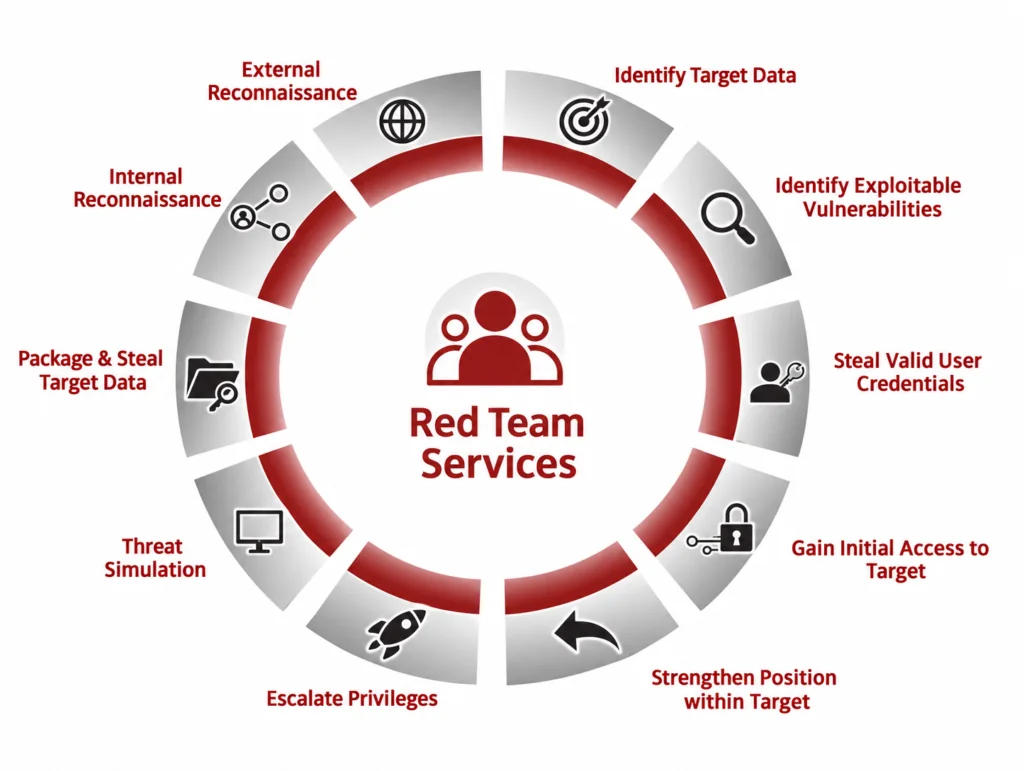
Our Red Team Services simulate sophisticated real-world cyberattacks to evaluate your organization's ability to prevent, detect, and respond to advanced threats. Our certified Red Team experts emulate modern adversaries using industry-recognized methodologies aligned with the MITRE ATT&CK Framework, Cyber Kill Chain, NIST CSF, NIST SP 800-115, and PTES.
Unlike traditional penetration testing, Red Team assessments replicate multi-stage attack scenarios involving external compromise, internal lateral movement, privilege escalation, credential abuse, social engineering, and objective-driven attacks to uncover hidden security gaps across people, processes, and technology.
Every engagement delivers detailed attack narratives, business impact analysis, evidence of compromise, attack path mapping, and prioritized remediation recommendations to strengthen cyber resilience and improve your organization's readiness against real-world cyber threats.
1. Planning & Rules of Engagement
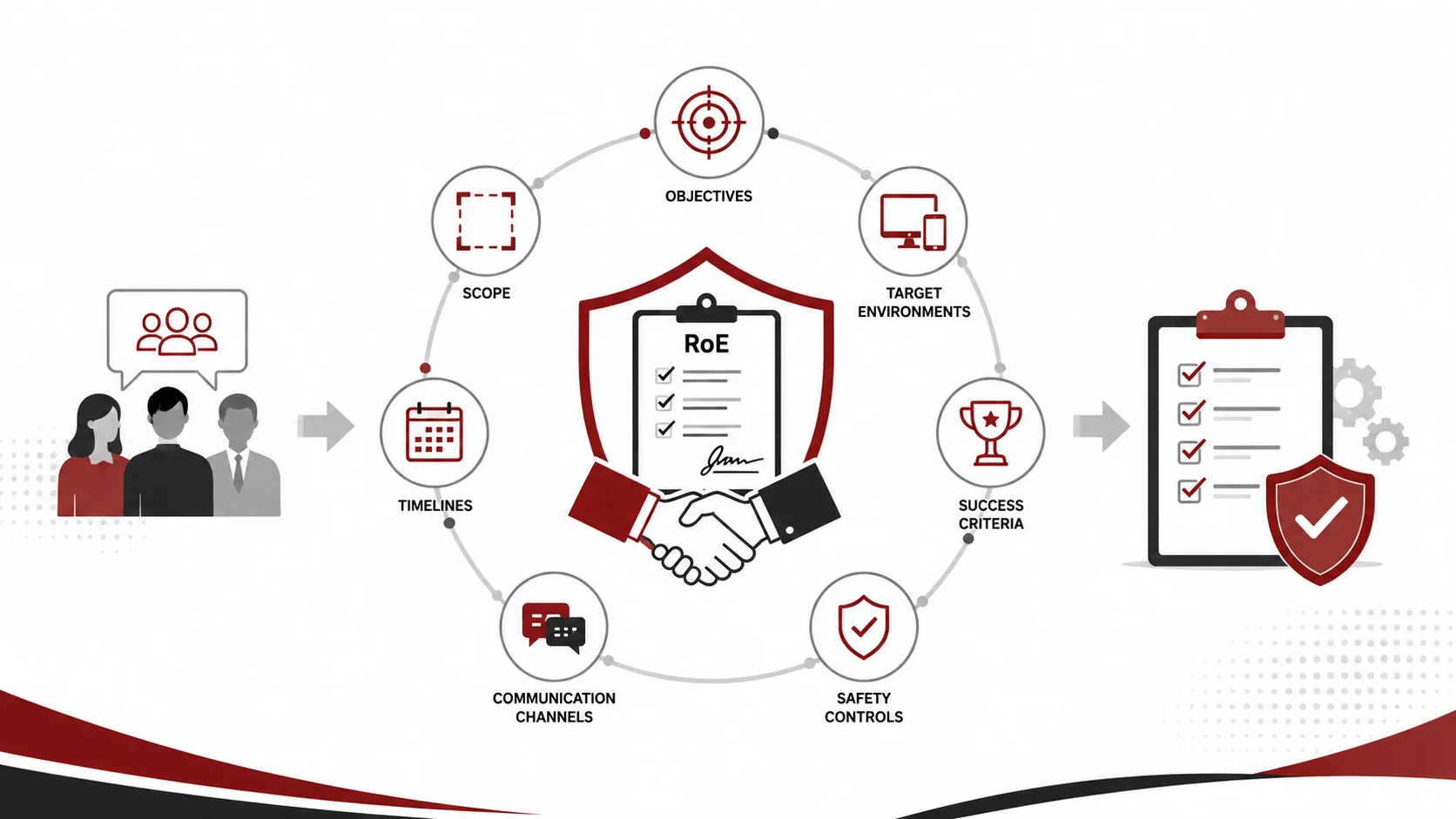
Every Red Team engagement begins by defining objectives, scope, target environments, timelines, communication channels, and success criteria to ensure the exercise aligns with your organization's security goals.
Working closely with key stakeholders, Varutra establishes comprehensive Rules of Engagement (RoE) that safely simulate real-world cyberattacks while minimizing operational risk, protecting production systems, and maintaining business continuity throughout the assessment.
2. Intelligence Gathering & Reconnaissance
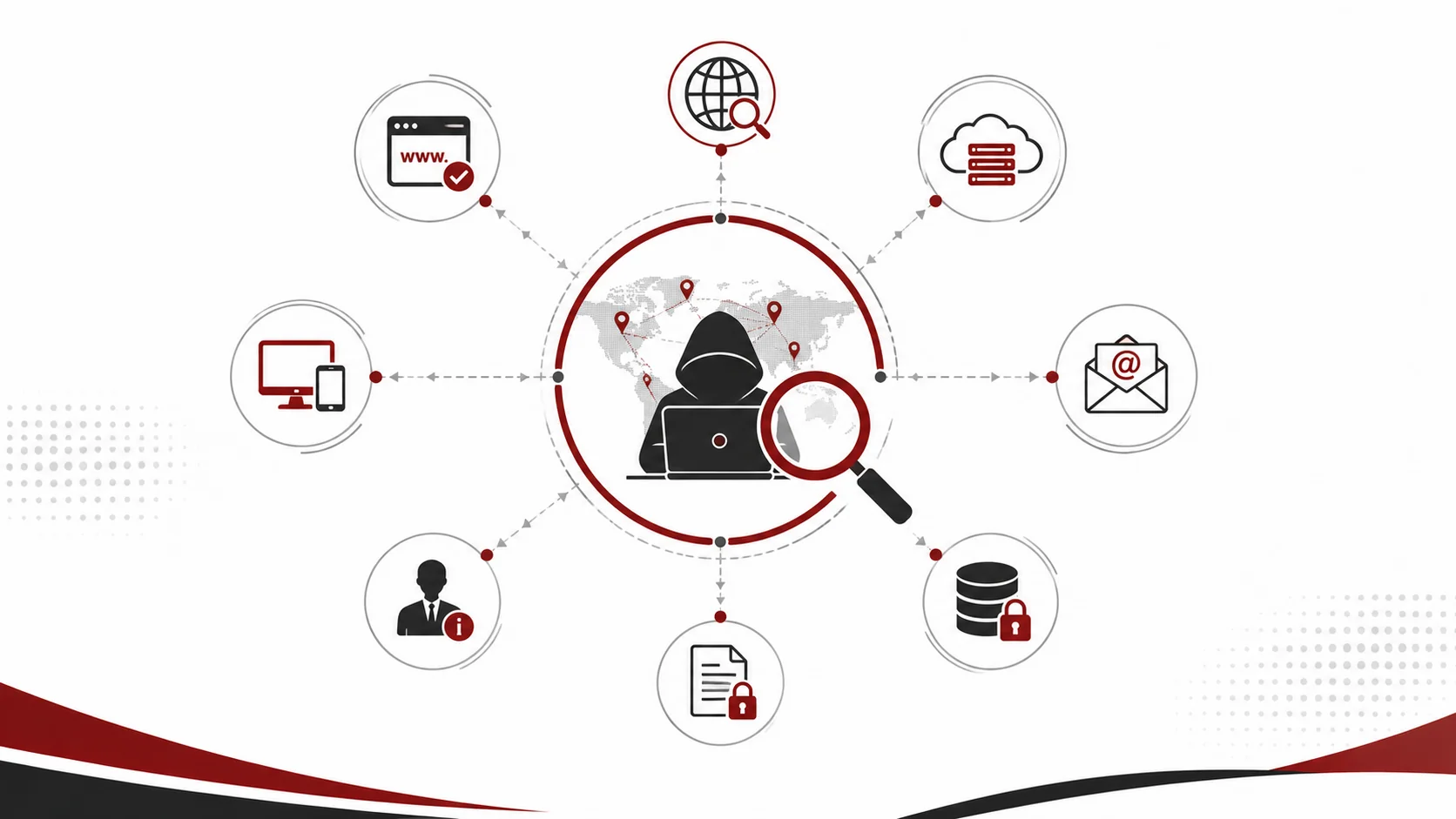
Our Red Team consultants perform extensive Open-Source Intelligence (OSINT) and passive reconnaissance to understand your organization's external attack surface before attempting any exploitation.
This includes identifying internet-facing assets, exposed infrastructure, cloud services, employee information, email addresses, domains, leaked credentials, technologies, and publicly available information that could be leveraged by real-world attackers.
3. Initial Access
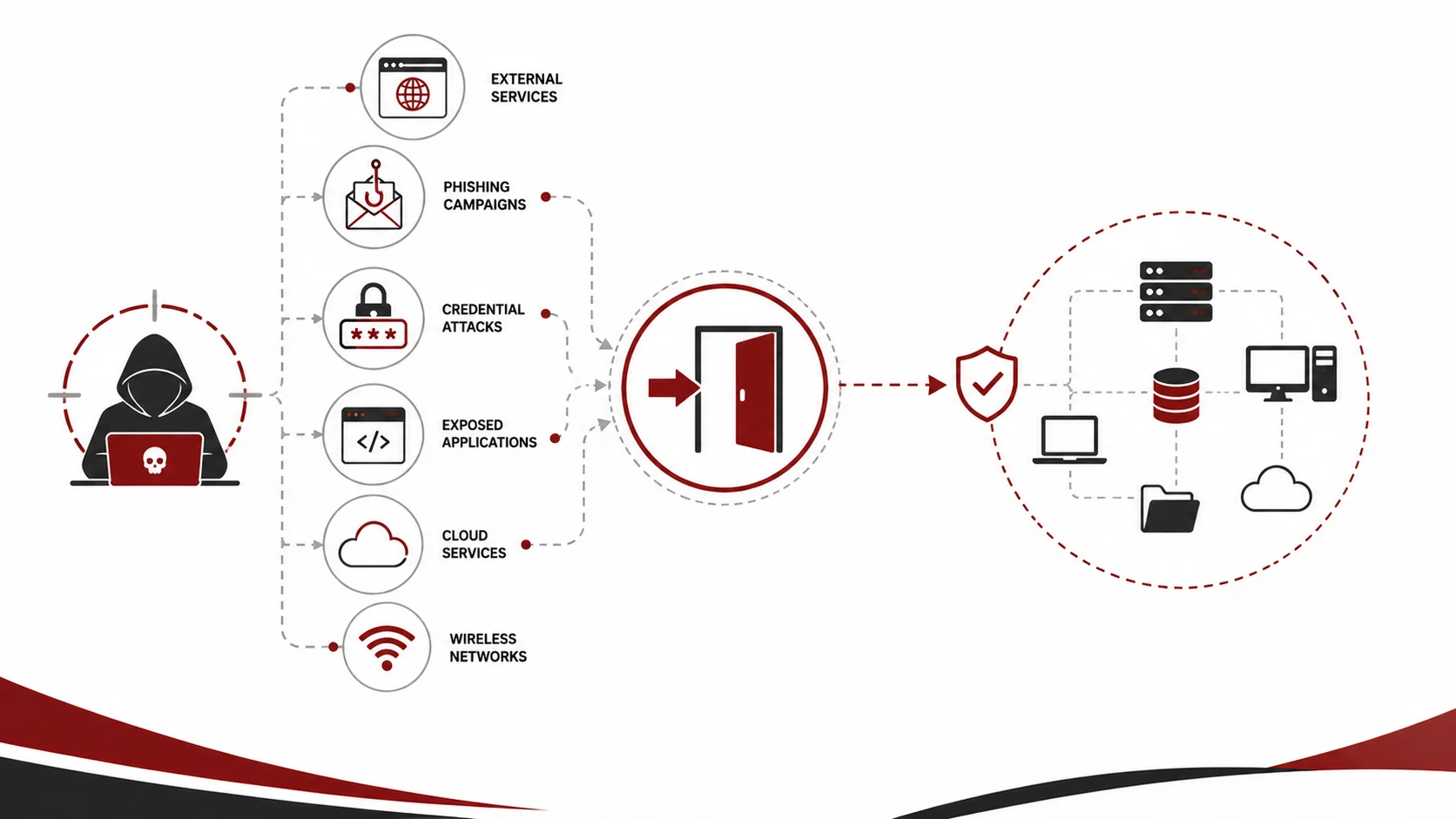
Using techniques employed by sophisticated threat actors, Varutra attempts to gain an initial foothold within the target environment through carefully controlled attack scenarios.
Depending on the agreed scope, this may include exploitation of external services, phishing campaigns, credential attacks, exposed applications, cloud environments, wireless networks, or other authorized attack vectors while maintaining complete control over the engagement.
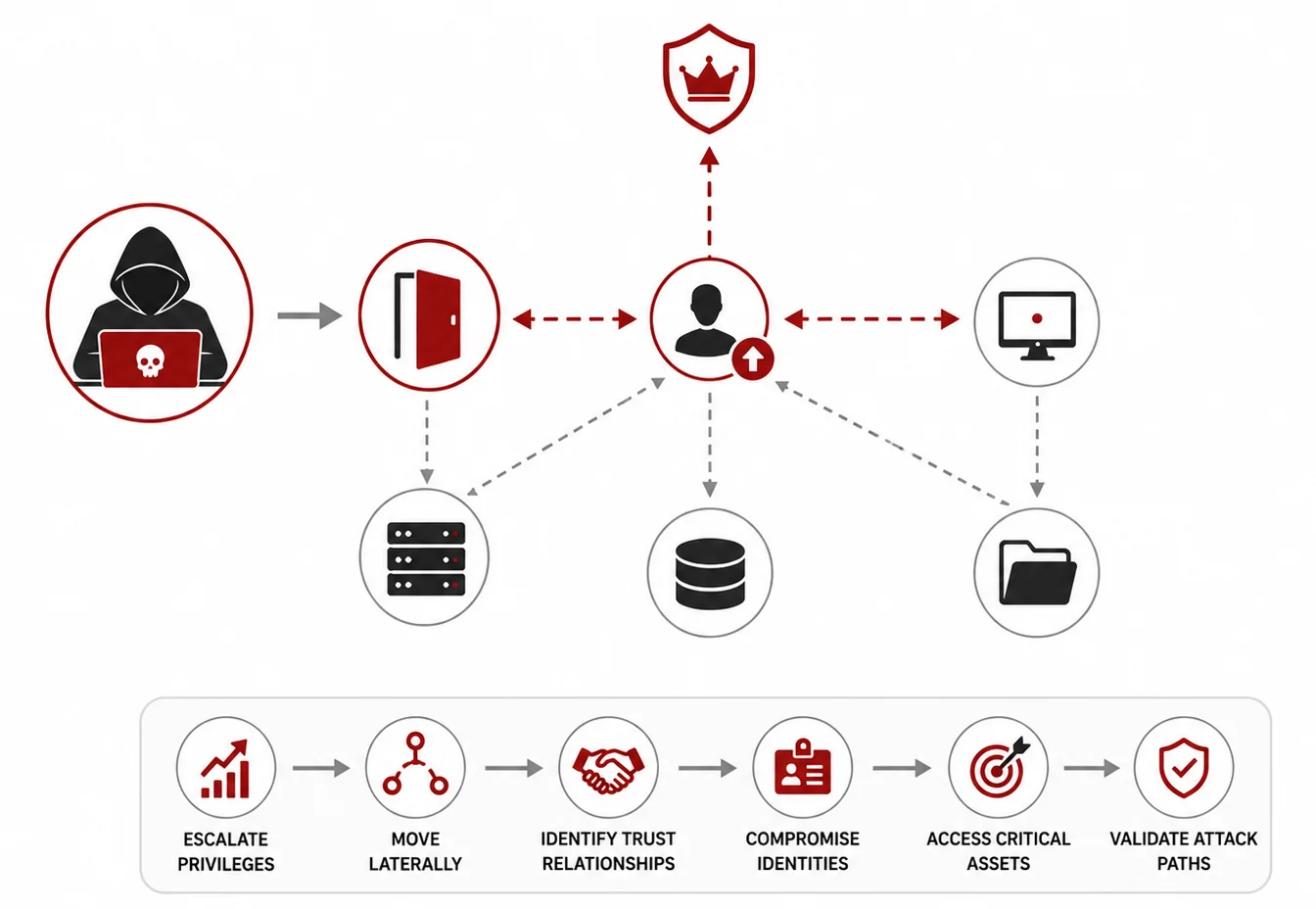
4. Privilege Escalation & Lateral Movement
Once initial access is achieved, our Red Team emulates advanced attacker behavior by escalating privileges, moving laterally across systems, identifying trust relationships, and compromising identities.
The assessment validates realistic attack paths toward critical business assets while remaining fully aligned with the agreed Rules of Engagement to ensure operational safety.
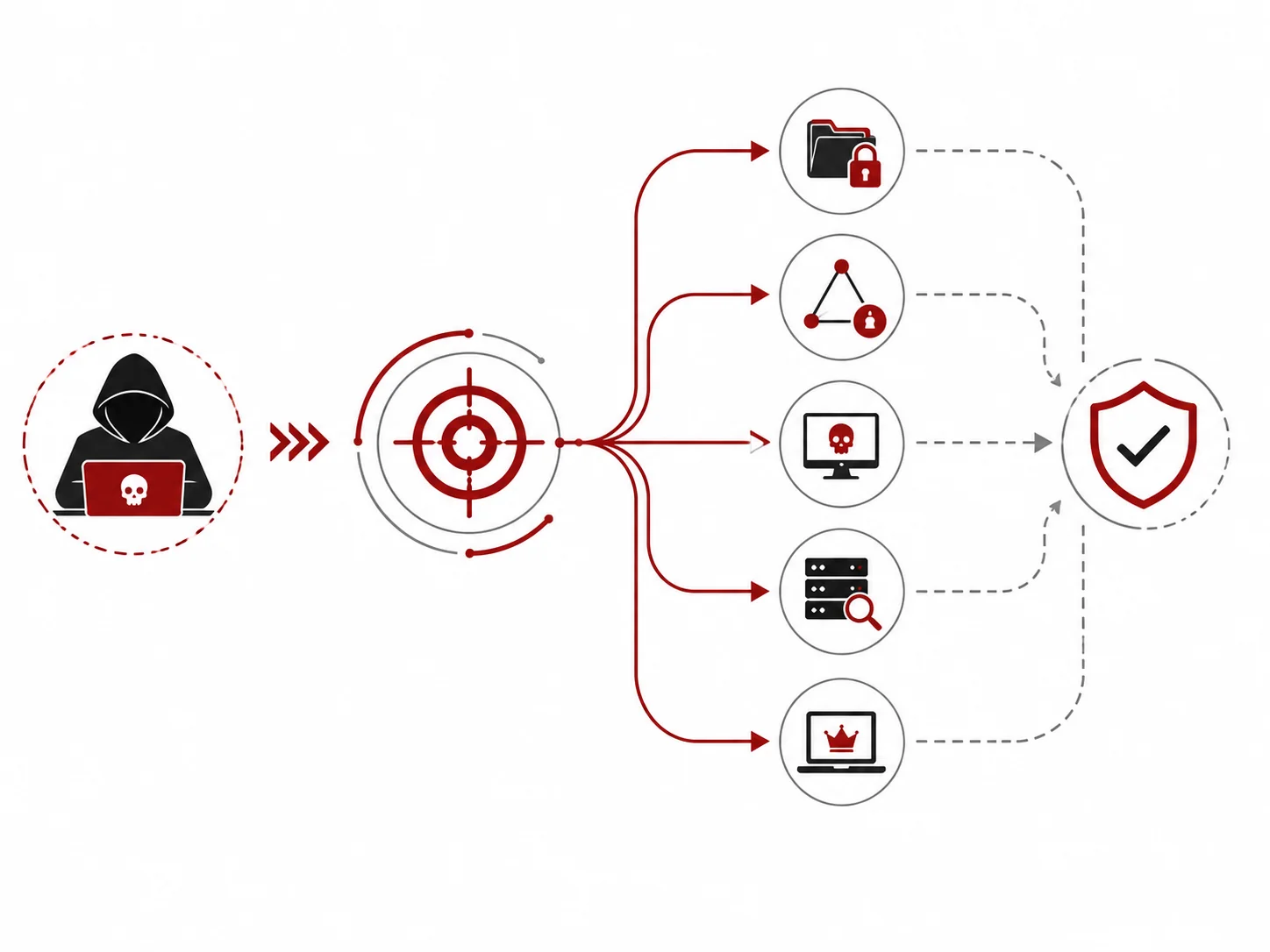
5. Objective Execution
The Red Team executes predefined objectives that represent realistic business risks, such as accessing sensitive information, compromising Active Directory, demonstrating ransomware impact, or reaching high-value systems.
Every action is carefully planned and controlled to prevent disruption while accurately demonstrating the potential business impact of a successful cyberattack.
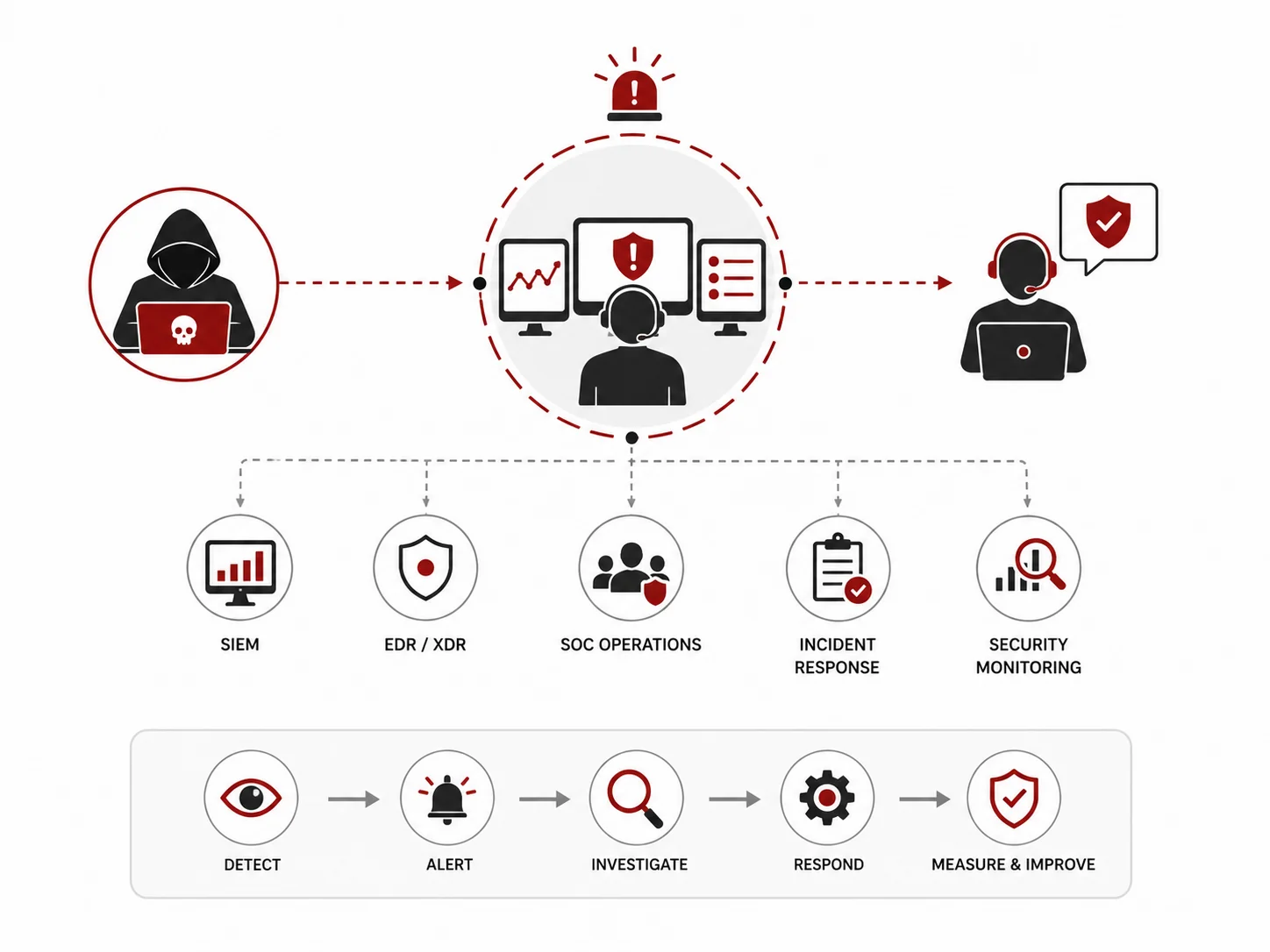
6. Detection & Response Evaluation
Throughout the engagement, Varutra evaluates how effectively existing security controls detect, alert, investigate, and respond to simulated attacks using real-world adversary techniques.
We assess the effectiveness of SIEM, EDR/XDR, SOC operations, incident response procedures, and security monitoring capabilities to identify detection gaps and strengthen organizational cyber resilience.
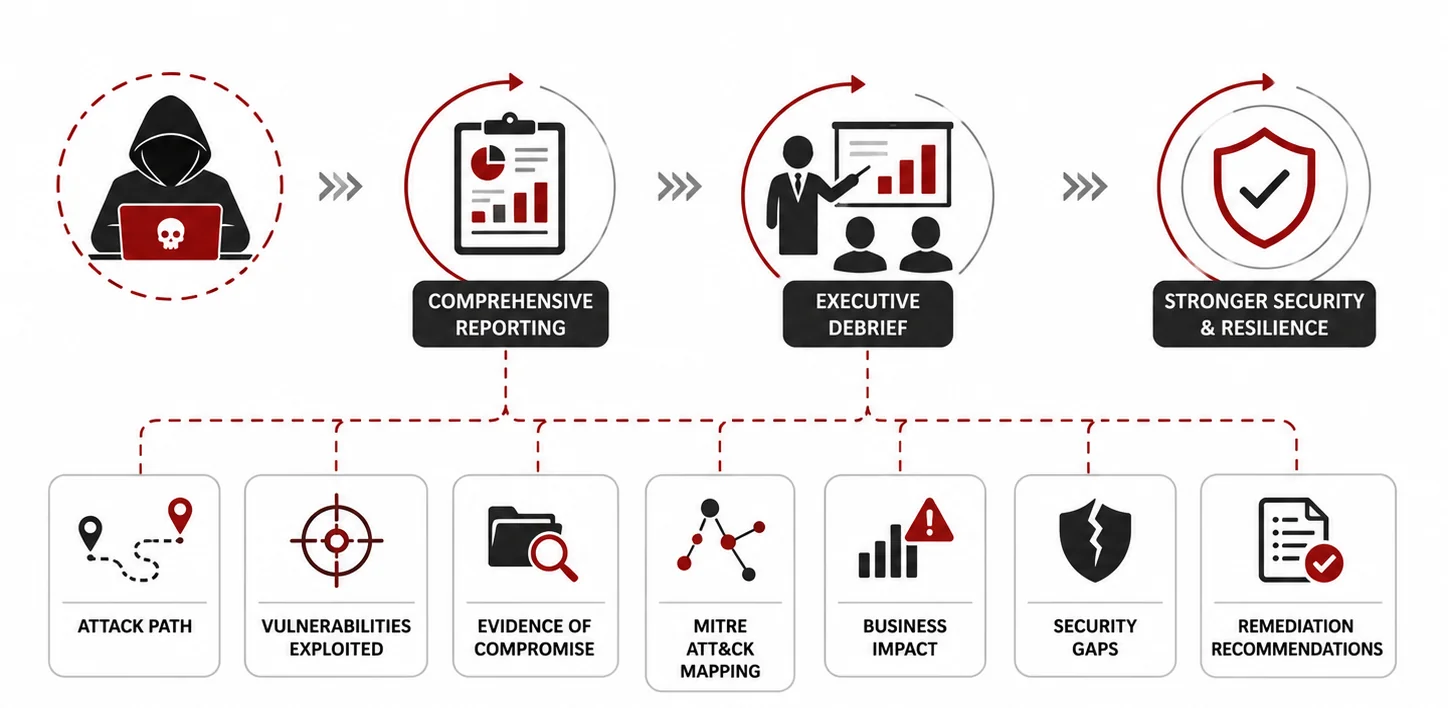
7. Reporting & Executive Debrief
At the conclusion of the engagement, Varutra delivers comprehensive executive and technical reports documenting the complete attack path, vulnerabilities exploited, MITRE ATT&CK mapping, evidence of compromise, business impact, and prioritized remediation recommendations.
We also conduct executive presentations and technical debrief sessions to help stakeholders understand the findings, improve their security posture, and strengthen long-term organizational resilience.
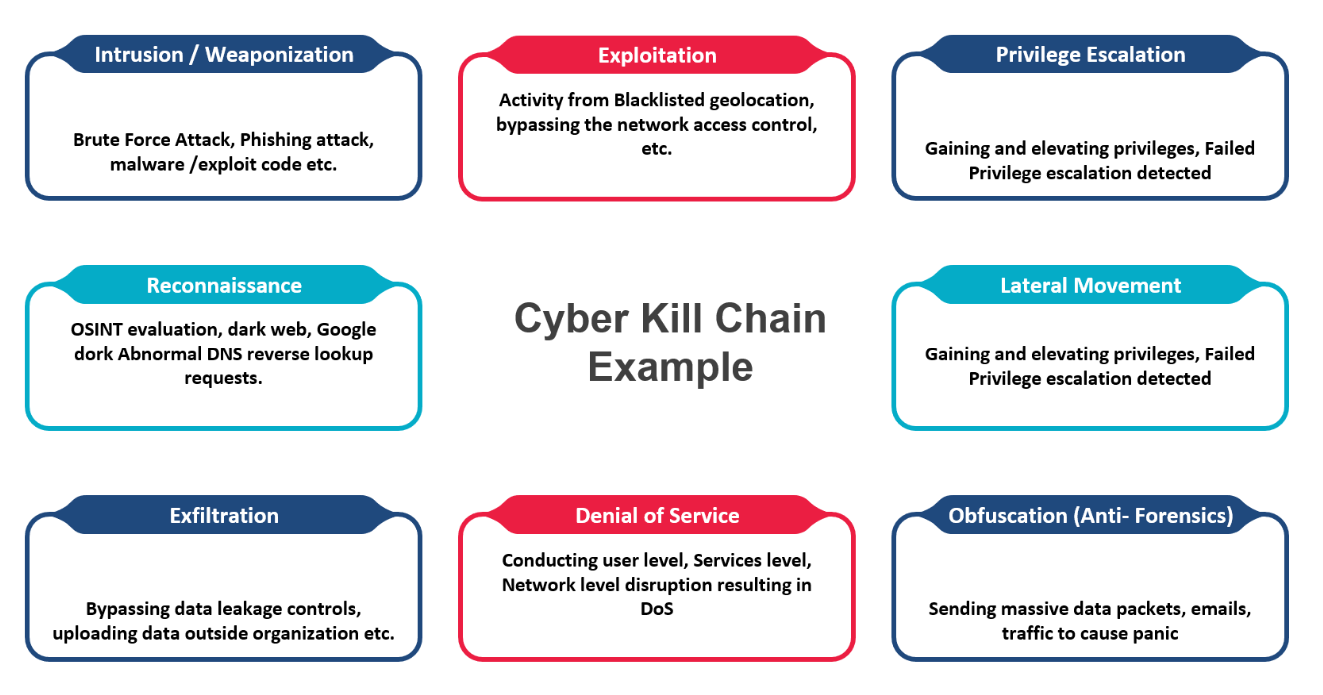
Example Cyber Kill Chain Scenario in a Red Team Assessment
This Cyber Kill Chain example illustrates how a Red Team engagement simulates a sophisticated cyber attack by following the same tactics, techniques, and procedures (TTPs) used by real-world threat actors. Each phase represents a critical step in the attack lifecycle, enabling organizations to understand how an adversary can infiltrate, move through, and compromise enterprise environments.
From reconnaissance and initial intrusion to exploitation, privilege escalation, lateral movement, data exfiltration, denial of service, and anti-forensic activities, this end-to-end attack simulation helps identify exploitable security gaps, validate existing security controls, and strengthen detection and incident response capabilities. By replicating realistic attack scenarios, organizations can proactively improve cyber resilience and reduce the risk of advanced cyber threats.
Frequently Asked Questions
What is a Red Team Assessment?
A Red Team Assessment is an advanced cybersecurity exercise that simulates real-world cyberattacks against an organization's people, processes, and technology to evaluate its ability to prevent, detect, respond to, and recover from sophisticated threats.
How is Red Teaming different from Penetration Testing?
Penetration Testing focuses on identifying vulnerabilities within a defined scope, while Red Teaming emulates real attackers who combine multiple attack techniques, exploit chains, social engineering, and lateral movement to achieve specific business objectives without predefined attack paths.
What frameworks does Varutra follow for Red Team exercises?
Varutra aligns Red Team engagements with the MITRE ATT&CK Framework, NIST Cybersecurity Framework (CSF), NIST SP 800-115, PTES, OWASP Testing Guide, CIS Controls, and industry-recognized adversary emulation methodologies.
Does Red Team testing impact business operations?
No. Every engagement is carefully planned with stakeholders to minimize operational disruption. Controlled attack simulations, defined Rules of Engagement, and continuous coordination ensure business continuity while maintaining realistic testing.
What environments can be included in a Red Team engagement?
Red Team assessments can include external infrastructure, internal networks, Active Directory, cloud environments, Microsoft 365, web applications, APIs, wireless networks, endpoints, IoT devices, OT environments, email systems, physical security, and social engineering scenarios.
What industries benefit from Red Team Services?
Organizations across banking, financial services, insurance, healthcare, manufacturing, telecommunications, government, energy, utilities, retail, education, technology, logistics, aviation, and critical infrastructure greatly benefit from regular Red Team assessments.
What deliverables are provided after a Red Team Assessment?
Clients receive executive summaries, technical reports, attack path documentation, MITRE ATT&CK mapping, evidence of compromise, risk ratings, business impact analysis, tactical remediation guidance, strategic security recommendations, executive presentations, and remediation validation support.